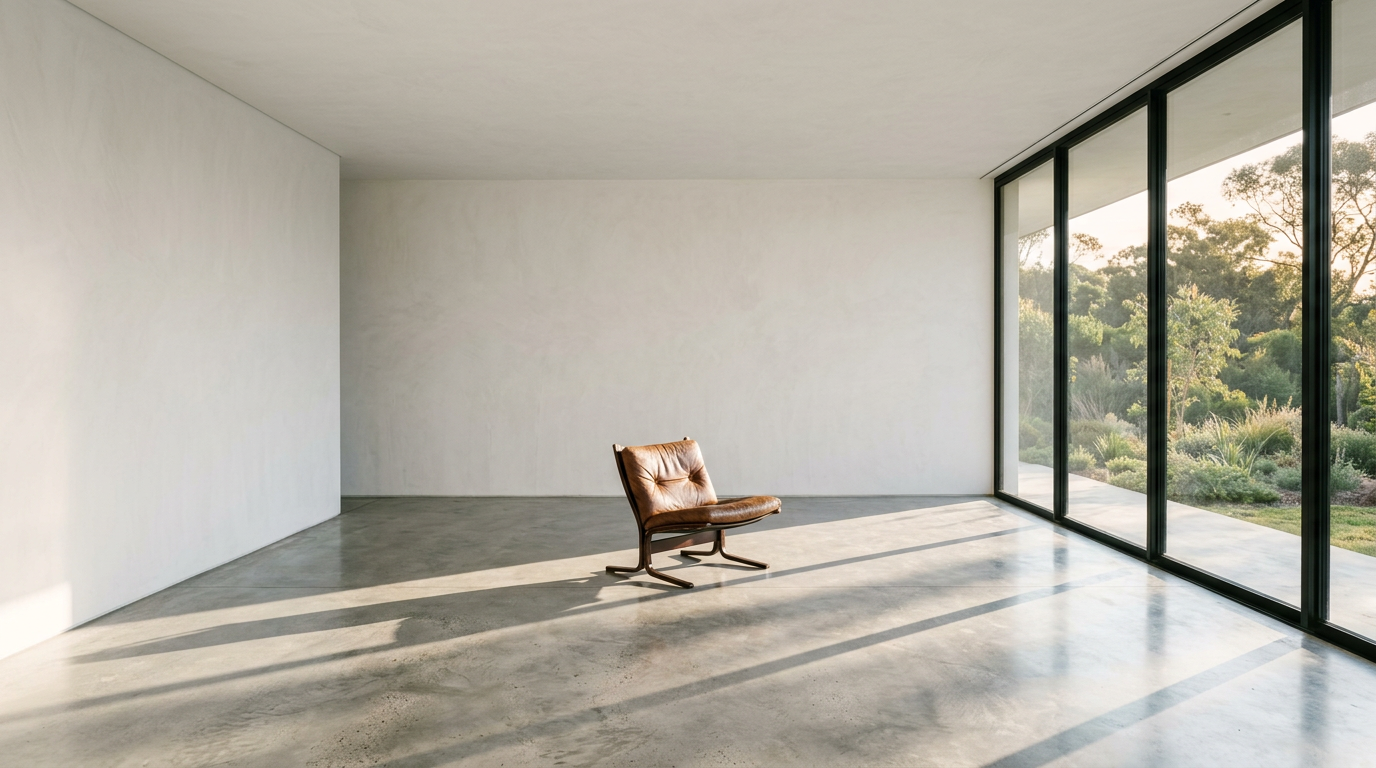
In the contemporary pursuit of the ideal residence, architects are frequently tempted by the additive impulse. We see a persistent desire to layer, to adorn, and to complicate the domestic envelope with an excess of fixtures, finishes, and formal gestures. Yet, the most enduring residential legacies are often defined by the opposite motion: the act of subtraction. This is the architecture of erasure, a rigorous design philosophy that treats the built environment as a block of marble from which the unnecessary must be chipped away to reveal the true, living form beneath.
The discipline of subtraction requires a profound clarity of vision. It is an exercise in restraint that forces the architect to confront the structural bones of a property without the crutch of decorative artifice. When we strip away the decorative molding, the unnecessary partitioning, and the visual noise of excess cabinetry, we are left with the raw truth of the dwelling. This is not minimalism for the sake of austerity, but rather a deliberate clearing of the field to allow for the architecture itself to function as the primary inhabitant.
Consider the logic of the internal wall. In many mid-century and contemporary structures, the floor plan is suffocated by redundant divisions that inhibit the fluid movement of air and gaze. By removing these barriers, the architect does more than create an open plan. They initiate a dialogue between the various zones of the house, allowing the kitchen, the living area, and the private study to participate in a shared atmosphere of light and volume. When a wall is removed, the remaining structure gains a new gravity. The ceiling planes seem to hover with greater purpose, and the floor becomes a continuous, unifying landscape that grounds the human experience.
Materiality finds its greatest expression when it is allowed to exist in isolation. When we eliminate the competition between competing textures, a singular choice of material becomes a powerful anchor. A wall of honed limestone, when freed from the distraction of nearby wallpaper or contrasting trim, begins to express its own geological history. The eye is no longer forced to dart between competing visual stimuli, allowing the occupant to experience the subtle variations in the grain, the cooling touch of the mineral, and the way light interacts with the porous surface. Subtraction, therefore, is not an absence of detail, but a radical amplification of the details that remain.
This philosophy extends to the integration of technology and utility. In a truly refined residence, the mechanics of living are hidden within the fabric of the building. By concealing the hardware of climate control, the conduit of lighting systems, and the infrastructure of daily convenience, the architect preserves the sanctity of the interior silhouette. When the technology is invisible, the house feels less like a machine and more like an extension of the natural world. The goal is to reach a state of equilibrium where the inhabitant is unaware of the structural labor that sustains their comfort.
The psychological impact of such a space is profound. A home that has been edited with surgical precision offers a respite from the chaotic stimuli of the outside world. It creates a sanctuary of silence, not merely in the auditory sense, but in the visual realm. When the architecture stops shouting, the inhabitants are invited to listen to the subtle rhythms of their own lives. They become the primary focus of the room, rather than the furniture or the ornamentation. The house becomes a frame for human existence, and that is the highest calling of residential design.
Ultimately, the architecture of erasure is an act of trust. It requires the owner to trust that the space is enough, that the interplay of shadow and structure is sufficient, and that the quality of life is elevated by having less. It is a timeless pursuit that rejects the fleeting trends of the market in favor of a permanent, serene, and profoundly human geometry. By subtracting the clutter, we leave room for life to expand, flourish, and endure within the walls we call home.