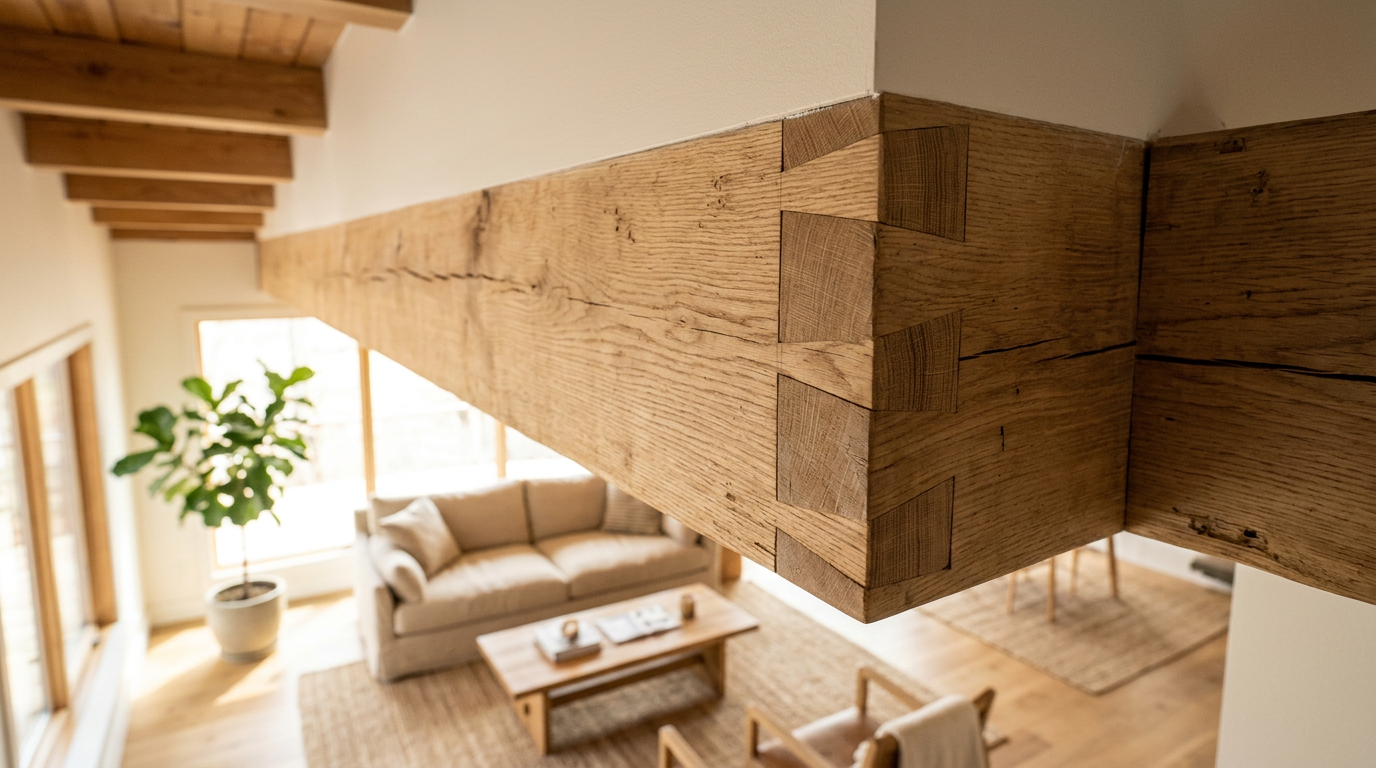
In an era dominated by the seamless veneer and the hidden fastener, there remains a radical, almost subversive beauty in the visible connection. To witness a home where the structural skeleton remains an active participant in the visual narrative is to engage with the very ethics of construction. This is not merely about ornamentation. It is about the intellectual honesty of the joint, where the meeting of two timber members becomes a testament to both physical laws and human intent. When we strip away the artifice of cladding and drywall, we find the true character of a residence: the dialogue between load and support, tension and compression, and the quiet, rhythmic language of precise assembly.
The architecture of intentionality begins at the threshold of the connection. Consider the mortise and tenon, a form of assembly that has persisted across civilizations because it respects the intrinsic nature of the material. In a contemporary residence, the elevation of such techniques transforms a structural necessity into an aesthetic anchor. When a heavy beam meets a vertical column through a visible, keyed joint, the house begins to communicate its own stability. It tells the inhabitant that this space was not merely assembled, but rather crafted with a specific understanding of how weight travels through a frame. This transparency of construction fosters a unique psychological security, grounding the resident in a space that feels engineered for permanence rather than staged for convenience.
The choice of wood species further complicates this dialogue. Dense, oily hardwoods like teak or white oak offer a different resistance to the chisel than the softer, more yielding pines. The master builder acknowledges this through the geometry of the cut. Materiality dictates the limitations of the form. When we integrate these organic materials into a modern floor plan, we are not simply decorating; we are curating a sensory archive of the forest. The grain patterns that flow through a dovetail connection represent a timeline of environmental conditions, locked forever into the geometry of a window frame or a staircase stringer. This is the ultimate luxury: the presence of a natural history within the domestic sphere.
Beyond the structural elements, the application of high-caliber joinery extends to the millwork and cabinetry that organize our daily lives. There is a profound difference between a drawer that slides on a hidden mechanical glide and one that operates on a hand-planed wooden runner. The latter demands a tactile engagement from the user. It requires a gentle hand, an awareness of the friction, and an appreciation for the movement of wood as it reacts to changes in humidity. Design becomes a daily ritual of interaction. By refusing the frictionless ease of modern industrial hardware, we invite a deliberate pace into our homes. The small, audible click of a latch or the smooth resistance of a sliding door serves as a reminder that we are living within a precision-engineered ecosystem.
The spatial relationship between these crafted nodes and the wider volume of the room is essential. In a high-ceilinged library or a long, gallery-like hallway, these structural intersections function as punctuation marks. They break the monotony of continuous surfaces and provide visual resting points that draw the eye toward the mechanics of the building. By highlighting these details, we elevate the home from a container of objects to a singular, cohesive piece of furniture on a monumental scale. The house becomes a machine for living that understands its own anatomy.
Ultimately, the pursuit of exceptional joinery is a rejection of the disposable. It is an investment in the idea that a home should be an inheritance of skill. When we prioritize the visible connection, we are creating a legacy that can be understood, maintained, and repaired by future generations. We are placing our faith in the hands of the artisan whose work survives long after the trends of the season have faded into irrelevance. This is the architecture of endurance, defined not by the grandeur of scale, but by the integrity of the individual point of contact. To live amongst such detail is to inhabit a space where every corner, every intersection, and every structural transition speaks of a profound respect for the craft of building.