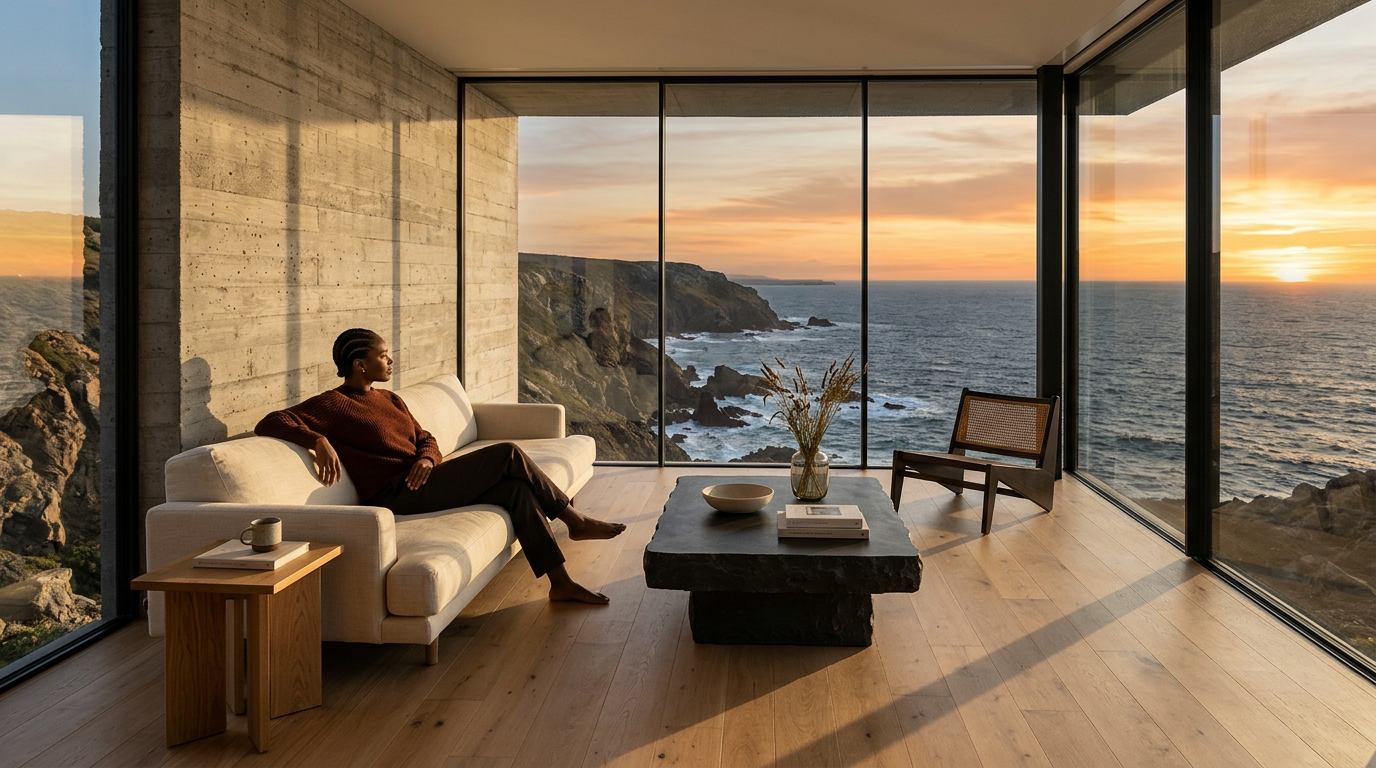
Architecture is rarely a conversation about what is present. At its most profound, it is a meditation on what remains when the ornamentation of contemporary life is stripped away. In a recent project nestled against the rugged granite shelves of a coastal bluff, the design team has achieved a rare equilibrium: a structure that feels less like a building and more like an extension of the geological strata itself. This is not merely a house but a study in elemental permanence, where the dialogue between raw materiality and the ephemeral qualities of light dictates every movement through the interior.
The primary architectural thesis here relies on the restraint of the palette. The choice of materials is not a decorative decision but a structural one. By utilizing board-formed concrete alongside reclaimed white oak, the architect creates a rhythmic oscillation between the cold, stoic weight of the foundation and the warmth of organic grain. This duality is essential. When one enters the main living volume, the eye is immediately drawn to the ceiling height, which shifts from a compressed, intimate entryway to an expansive, double-height void. This spatial compression serves as a psychological palate cleanser, preparing the inhabitant for the sudden, breath-taking release into the primary gallery space.
Light is treated here as a tectonic element. Rather than relying on traditional apertures that frame views as static paintings, the design incorporates deep, recessed clerestories and floor-to-ceiling glass planes that are set back from the structural columns. This technique allows for the diffusion of daylight across the concrete walls, softening the harsh shadows that often plague modernist structures. The interplay of light and shadow serves to articulate the texture of the materials. As the sun arcs across the sky, the concrete surface evolves, revealing its aggregate and the subtle imperfections of the pour. It is a living documentation of the craft of building, a reminder that the human hand is always present in the creation of space.
The circulation path is intentionally choreographed to favor discovery over efficiency. There is a deliberate absence of corridors. Instead, rooms flow into one another through transitional thresholds defined by changes in floor elevation or shifts in wall opacity. This fluidity encourages a slower pace of life, forcing the inhabitant to engage with the architecture in a tactile manner. In the kitchen, a monolithic island carved from a single block of basalt acts as the anchor of the domestic sphere. It is a sculptural object that demands interaction, its cool, honed surface contrasting with the soft, indirect lighting hidden within the custom cabinetry. Here, the utility of the space is elevated to the level of ritual.
A residence of this caliber offers timeless advice to those seeking to build or renovate: true luxury is found in the integrity of the connection between the structure and its landscape. Many homes are placed upon a site as if they were alien objects, ignoring the topography and the indigenous flora. This property, however, honors the site by mimicking its rhythms. The exterior walls are clad in local stone, which has been dry-stacked to allow for the natural weathering of the facade. Over time, the house will integrate further into the environment, with lichen and moss claiming the crevices of the masonry. This process of aging is not a sign of decay but of acceptance.
The furniture selection follows this same philosophy of understated significance. Pieces are chosen for their form, their ability to occupy space without dominating it, and their capacity to age gracefully. By avoiding the ephemeral trends that define much of the modern market, the interior achieves a sense of permanence that is increasingly rare. The rooms are designed to be lived in, to bear the marks of time, and to provide a sanctuary where the quietude of the mind is mirrored by the stillness of the walls. It is a masterclass in architectural subtraction, proving that when we remove the unnecessary, we create the space for the essential to thrive. This home is a cultural artifact, a quiet testament to the belief that architecture should not shout for attention but, rather, resonate with the deep, steady hum of the earth itself.