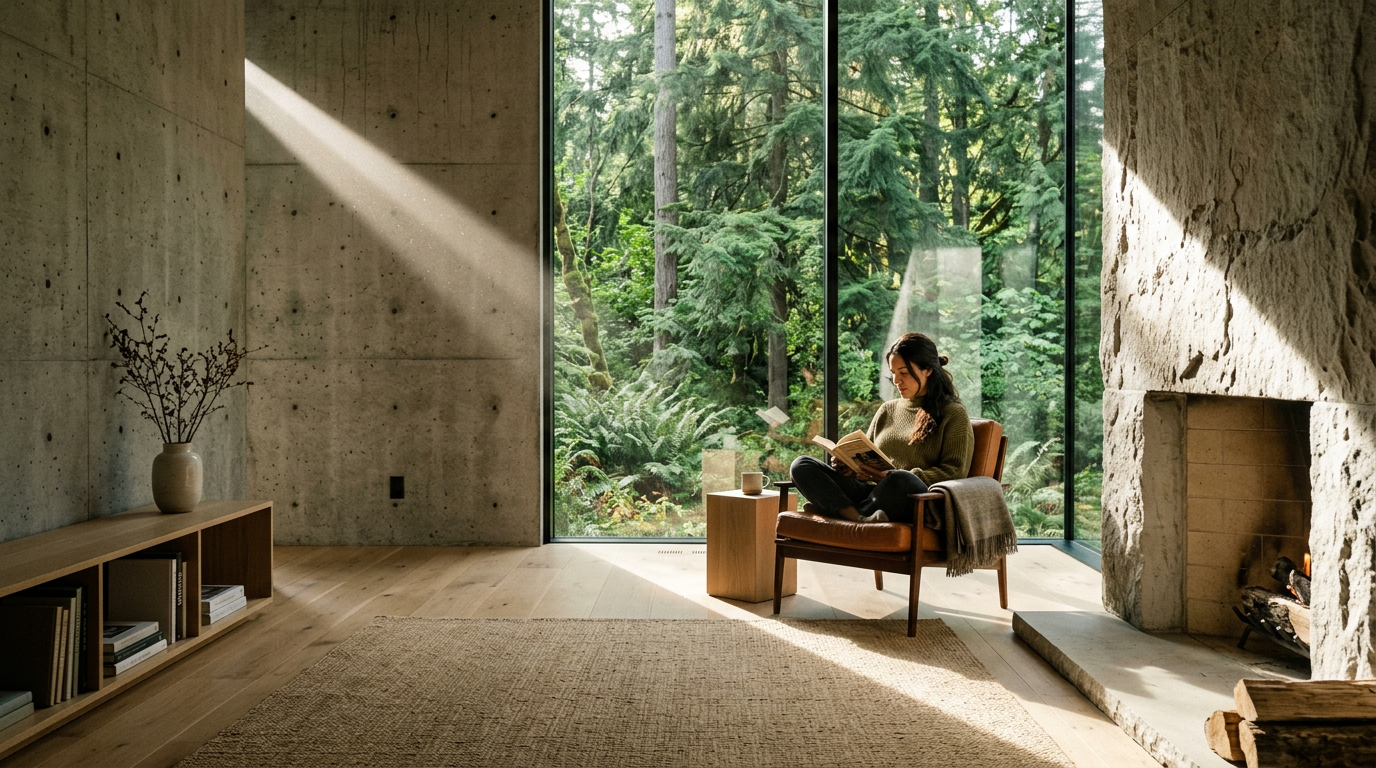
In the contemporary discourse of residential design, there is a pervasive tendency to confuse luxury with abundance. We equate architectural success with the sheer square footage of a footprint or the ostentatious display of rare stone. However, the most significant domestic structures act as conduits for something far more ephemeral and infinitely more valuable: the interplay of light and spatial rhythm. When we examine a truly exceptional residence, we are not looking at a mere container for living. We are witnessing a carefully curated dialogue between the built environment and the natural world, a structural poem written in the language of shadow and void.
The hallmark of a residence that transcends the status of a commodity is its structural honesty. True architecture demands a rigorous commitment to material integrity. Whether the primary medium is raw, cast-in-place concrete or the warm, honeyed grain of white oak, the material must be allowed to speak with its own voice. When a designer forces a material to mimic something it is not, the spatial energy of the room dissipates. Instead, the most enduring homes celebrate the weight and texture of their components. A heavy limestone wall does more than provide thermal mass. It anchors the inhabitant to the earth, creating a psychological grounding that is essential for a life of quiet contemplation. The choice of material should always serve the sensory experience of the inhabitant, rather than the decorative vanity of the designer.
Consider the role of the threshold. In lesser properties, the transition from exterior to interior is treated as a functional necessity, a mere door or hallway. In a masterfully executed home, the threshold is a transformative event. It is a moment of compression that precedes the expansion of space, a rhythmic pause that alerts the senses to a change in atmospheric pressure. By manipulating ceiling heights and adjusting the quality of natural light, an architect can dictate the tempo of a house. A low-slung, intimate entryway that opens into a double-height living volume creates a visceral sense of release. This is the spatial equivalent of a musical crescendo, a deliberate manipulation of volume that makes the architecture feel alive and reactive to the human body.
Light, however, remains the primary tool of the architect. It is the intangible mortar that holds the entire structure together. A home that is bathed in uniform, flat illumination is a home that lacks depth and character. Exceptional design invites the sun to participate in the architecture through the strategic placement of apertures. High clerestory windows might be used to catch the golden, glancing light of late afternoon, casting long, dramatic shadows across a polished concrete floor. Deep, recessed reveals around window frames can soften the harsh glare of noon, turning the light into a diffused, ethereal glow that seems to emanate from the walls themselves. The successful architect treats light as a physical object, something that can be sculpted, directed, and contained within the volume of a room.
We must also address the relationship between the structure and the landscape. A home should never sit in opposition to its site. It should emerge from the terrain as if it were a natural extension of the topography. This involves more than just large windows that frame a view. It requires an integration of sightlines and flow. By extending interior flooring materials onto a terrace, the boundary between inside and outside is dissolved. This continuity allows the landscape to become part of the interior aesthetic, a living mural that shifts with the seasons. A home that ignores its surroundings is a home that remains perpetually isolated. A home that embraces its context becomes a participant in the wider ecology of the land.
Ultimately, the value of an architecturally significant home lies in its ability to facilitate a higher quality of life. It provides a container for memory and growth, a quiet backdrop against which the complexity of human experience can unfold. It is not about the trends that define a particular decade or the digital tools used in the drafting process. It is about the timeless pursuit of balance, proportion, and the quiet dignity of well-considered space. By stripping away the unnecessary and focusing on the essential, we create homes that are not just habitable, but transformative.