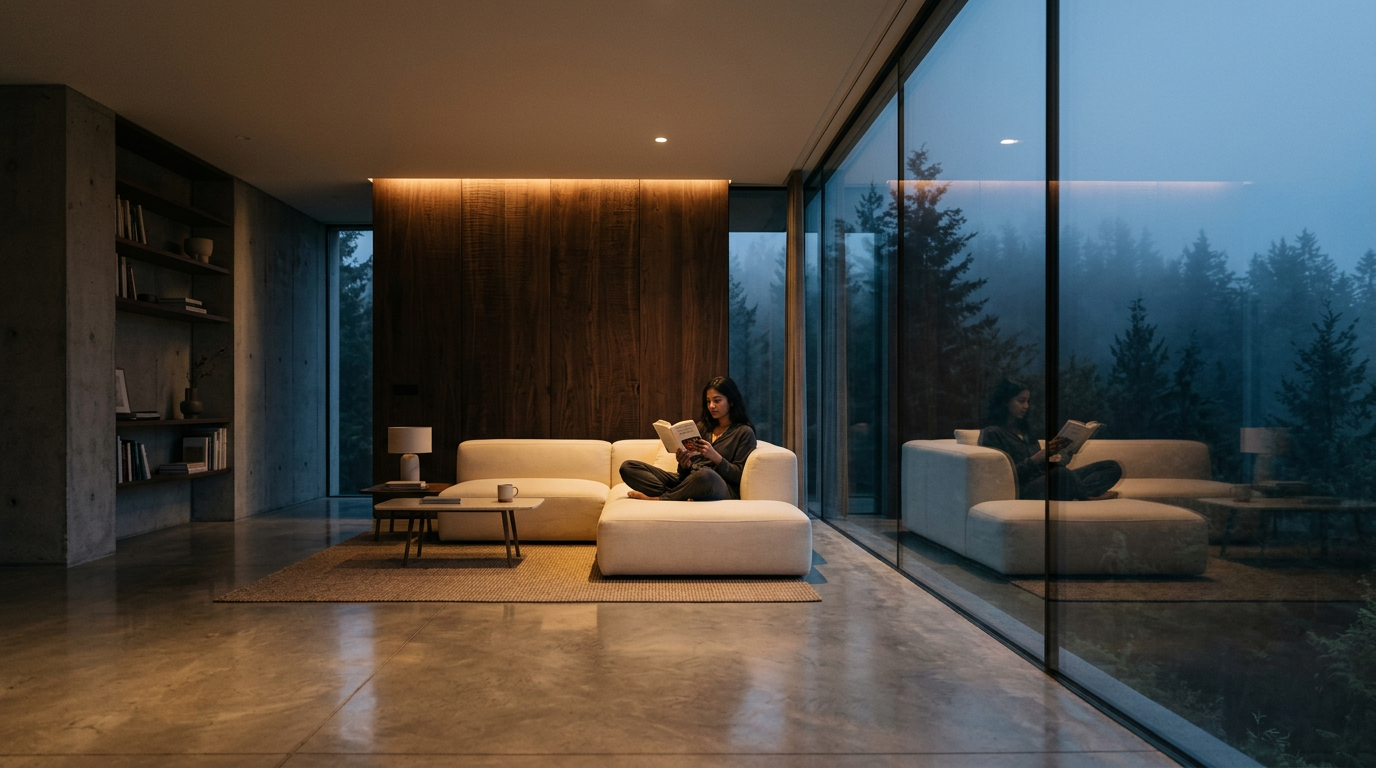
Architecture often finds its most compelling expression not in the weight of the wall but in the deliberate absence of it. In the contemporary residence, the elevation of transparency serves as a profound architectural statement: one that challenges the traditional binary between the interior refuge and the expansive exterior world. When we consider the house as a vessel for living, we must examine how the manipulation of glass, voids, and sightlines creates a domestic theater where the architecture itself becomes a silent director of human movement.
The successful execution of transparency requires a disciplined understanding of structural rhythm. It is not merely about installing floor to ceiling apertures, but rather about the curation of views and the calibration of light. The interplay of clear glazing against matte surfaces creates a tension that anchors the dwelling within its site. By utilizing high performance glass, the architect effectively erases the threshold between the hearth and the horizon. This is not an invitation for the outside to overwhelm the interior, but a sophisticated negotiation that allows the landscape to participate in the daily rituals of the occupants.
Consider the role of the circulation path in such a design. When hallways are treated as galleries of light rather than mere corridors, the act of walking through a home becomes a performative experience. The choice of materials in these transition zones is critical. One might find polished concrete floors that mirror the soft glow of dusk, or white oak paneling that warms the crisp lines of a steel frame. These choices speak to a tactile sensibility that grounds the ethereal nature of the glass. Materiality acts as the steady heartbeat of the home, providing a necessary contrast to the fluidity of the glass partitions that may define the living spaces.
The concept of domestic theater relies heavily on the deliberate placement of voids. A double height atrium, for instance, does more than provide volume. It invites the sky to descend into the floor plan, shifting the quality of light as the sun traces its arc across the sky. This constant flux forces the resident to engage with the passage of time in a way that static architecture cannot facilitate. The home becomes a timepiece, where shadows lengthen across the grain of a walnut cabinet or dance upon the surface of a basalt hearth, reminding us that we occupy a space that is never truly finished.
One must also address the necessity of privacy in a home defined by transparency. The most masterful designs achieve this through the strategic layering of volumes. By recessing private chambers behind courtyards or using screened timber slats to filter direct sunlight, the architect maintains a sense of sanctuary without sacrificing the architectural narrative. Privacy is thus achieved through spatial hierarchy rather than physical barriers, allowing for a home that feels both open and profoundly secure. The layering of light, shadow, and opacity creates a depth of field that invites the eye to travel through the house, uncovering hidden corners and overlooked vistas.
Design literacy demands that we appreciate the craft of the joinery and the precision of the structural connections. When a glass panel meets a steel mullion, the connection should be seamless, echoing the intent of a sculpture. It is in these details that the ideology of the home is revealed. The furniture choices should complement this transparency, favoring low profiles and honest forms that do not compete with the architectural envelope. A collection of mid-century chairs or a monolithic stone dining table provides a sense of gravity, anchoring the inhabitants amidst the ephemeral nature of their surroundings.
Ultimately, the residence that embraces transparency serves as a bridge between the inhabitant and the natural world. It demands a higher level of conscious living, as every object and movement is framed by the architecture. This is the beauty of the domestic theater. It challenges us to curate our own lives with as much care as the architect curated the structure. When architecture succeeds in this way, it stops being a static object and becomes a living dialogue, an ongoing conversation between the occupant, the light, and the earth itself.