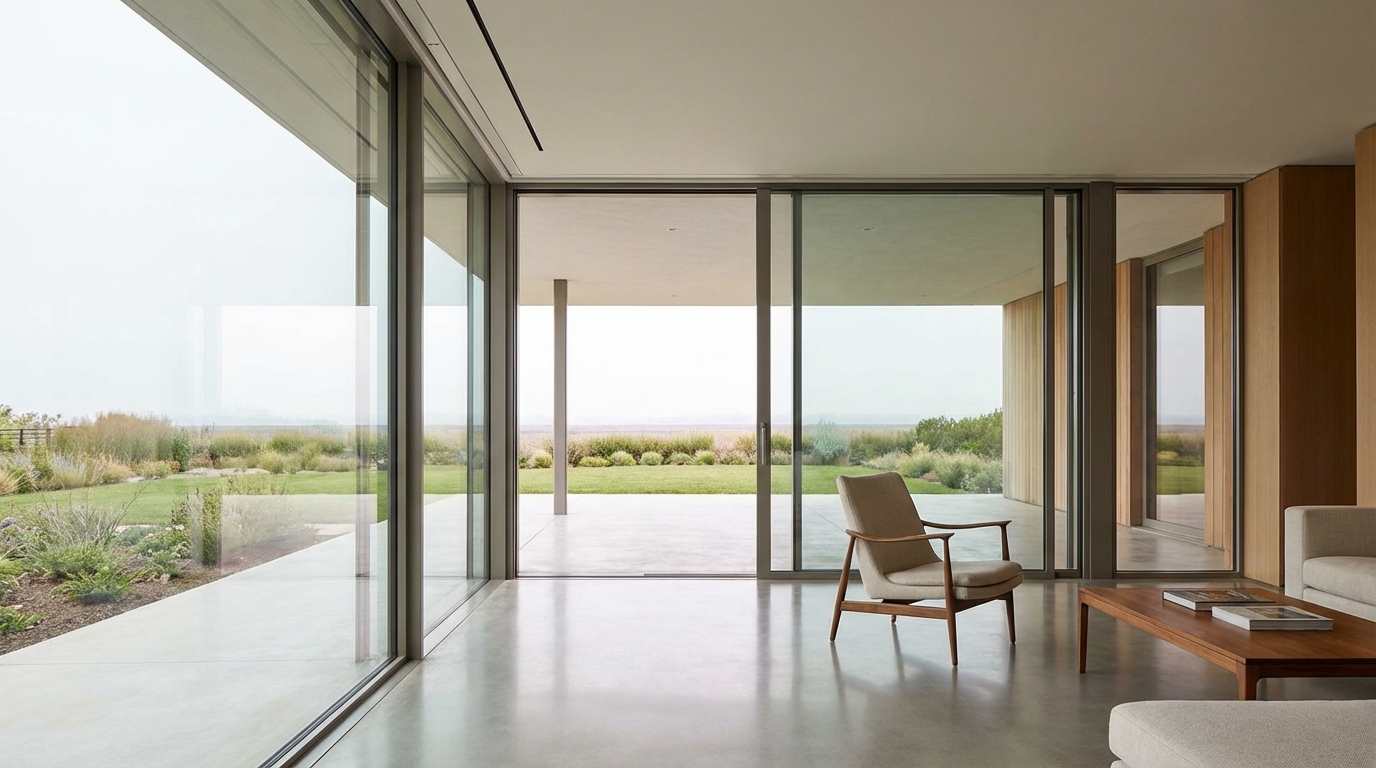
Architecture is rarely a static endeavor: it is a continuous negotiation between the permanence of shelter and the transience of the environment. In the recent renovation of a mid-century hillside residence, the design team chose to address this tension not through the addition of mass, but through the total erasure of the barrier. The project centers on the installation of a series of floor-to-ceiling kinetic glass panels that operate on a recessed track system, effectively allowing the living room to become a terrace. This is not merely an architectural convenience: it is a fundamental reconfiguration of how one occupies a space.
The success of such a renovation hinges upon the precision of the threshold. By sinking the floor tracks into the foundation and aligning the interior flooring material with the exterior decking, the architects achieved a seamless plane. When the panels are retracted, the eye no longer perceives the house as a container. Instead, the domestic volume becomes a pavilion, a sheltered observation point that remains physically connected to the topography. The choice of ultra-clear, low-iron glass ensures that the visual distortion is negligible, allowing the exterior flora to maintain its saturation and depth even when viewed through the glass.
Material continuity is the primary discipline here. The interior floors are composed of honed basalt, chosen for its thermal mass and its ability to absorb the low-angled light of the setting sun. By extending this same basalt onto the external patio, the architects create a unified horizontal datum. This choice reinforces the idea that the living room and the garden are not two separate entities, but rather a single, expansive environment governed by the rhythm of the seasons. The dialogue between structure and landscape is elevated when the materials themselves do not distinguish between the inside and the outside.
Lighting plays a critical role in this spatial dissolution. During the day, the glare that often plagues glass-heavy structures is mitigated by deep-set roof overhangs. These eaves serve a dual purpose: they provide necessary solar protection for the interior, and they frame the view of the landscape like a panoramic lens. At night, the absence of reflective surfaces on the exterior allows the interior light to spill into the garden, effectively turning the dense foliage into the primary wall covering. The house feels larger because its walls are no longer defined by plaster or wood, but by the outer limit of the illumination.
The craft of this renovation lies in the hidden mechanics. To achieve such a degree of transparency, the structural support must be entirely removed from the corners. The architects utilized a cantilevered steel moment frame, which carries the weight of the roof while leaving the corners of the living space completely unobstructed. This requires an immense degree of coordination between the structural engineer and the glazing fabricator. Every millimeter of tolerance counts when the goal is to create a corner that vanishes into thin air. It is a testament to the fact that architectural significance is often found in what is absent rather than what is present.
When considering such an intervention, one must prioritize the longevity of the hardware over the aesthetic of the glass itself. The kinetic systems that allow these walls to glide must be rated for extreme weather conditions, as the seal against the elements is the only thing protecting the interior climate. High-performance weather stripping and hidden drainage channels are the unsung heroes of this design. They permit the illusion of an open-air pavilion without the compromise of air infiltration or moisture accumulation. It is a rigorous, technical approach to a poetic ambition.
Ultimately, this renovation serves as a reminder that the most compelling residential spaces are those that acknowledge the fluidity of the world outside. By transforming the wall into a variable element, the home ceases to be a fortress and begins to function as a responsive instrument. Whether one is surrounded by the stillness of a winter morning or the humid warmth of a summer evening, the architecture adapts. It encourages the occupant to engage with the natural world as a neighbor rather than a guest. The result is a space that feels perpetually fresh, perpetually light, and entirely in harmony with the site it occupies.