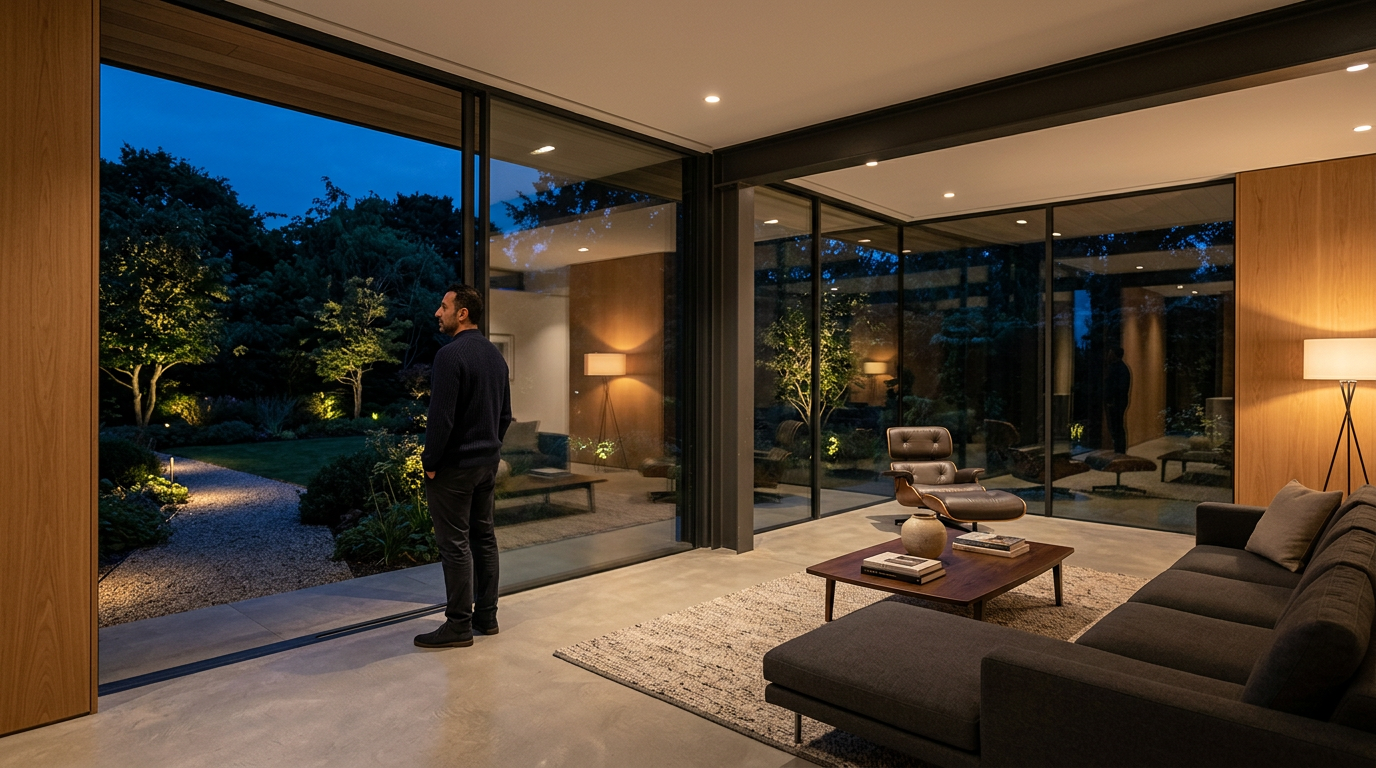
In the lexicon of residential design, glass is frequently dismissed as a mere necessity: a transparent membrane intended to facilitate the passage of light or the observation of a view. Yet, when approached with the rigor of a master builder, glass reveals itself as a medium of profound architectural complexity. It is not an absence of wall, but rather a presence of light, a material that possesses the unique ability to dissolve the boundary between the internal sanctuary and the external landscape. When specified with intention, glass becomes a structural protagonist, redefining how we perceive the volume of a room and the rhythm of the passing day.
The true power of glass lies in its refractive capacity. Unlike opaque materials that absorb or deflect light, high-performance glazing systems curate it. Consider the way light strikes a plane of low-iron glass, which is stripped of the typical greenish tint inherent in standard silica. The result is a startling clarity that allows the interior colors to remain true, unadulterated by the medium itself. This is not merely a functional choice, but a deliberate aesthetic statement. It demands a heightened level of craft from the surrounding architecture, as the intersection of glass and frame must be executed with surgical precision to maintain the illusion of weightlessness.
Spatial fluidity is the primary gift of a well-conceived glass installation. In residences that master this dialogue, the architecture does not merely sit within a landscape; it absorbs the landscape into its own circulatory system. A corner window, devoid of a structural mullion, pushes the eye toward the horizon, creating a sense of expansiveness that defies the actual square footage of the floor plan. This architectural sleight of hand requires a deep understanding of structural load paths, often utilizing cantilevered headers or hidden steel reinforcements that allow the glass to meet glass at a silent, invisible seam.
We must also consider the tactile nature of reflection. Glass acts as a mirror during the transition from day to dusk, capturing the shifting silhouettes of the interior and casting them onto the garden beyond. This layering of images adds a cinematic quality to the residence. The home becomes a vessel for light, changing its character as the sun tracks across the sky. At noon, the glass is a sharp, crystalline barrier; at twilight, it becomes a soft, glowing lantern that anchors the property within the dark terrain. This transformation ensures that the architecture remains a living organism, responsive to the natural cycles of the environment.
The selection of glazing is an exercise in nuance. Architects must balance the desire for thermal efficiency with the aesthetic necessity of thin, unobtrusive profiles. Modern advancements in vacuum-insulated panels have allowed for thinner profiles that do not compromise the building envelope. This represents a triumph of engineering that serves the spirit of the design. When the frames are recessed into the floor and ceiling planes, the glass functions as a pure, floating aperture. This minimalist intervention places the focus squarely on the relationship between the inhabitant and the horizon, effectively removing the frame from the visual equation.
Ultimately, the use of glass in residential architecture is a testament to the desire for connection. By reducing the physical barriers between the domestic sphere and the wild, untamed world, we invite the atmosphere inside. It is a bold architectural gesture that requires a commitment to both transparency and privacy. The most successful homes use glass not to expose, but to frame, treating the world outside as a curated element of the interior decor. Through this disciplined application, glass ceases to be a simple construction material and evolves into a lens: a sophisticated tool for observing, and eventually participating in, the life of the landscape.