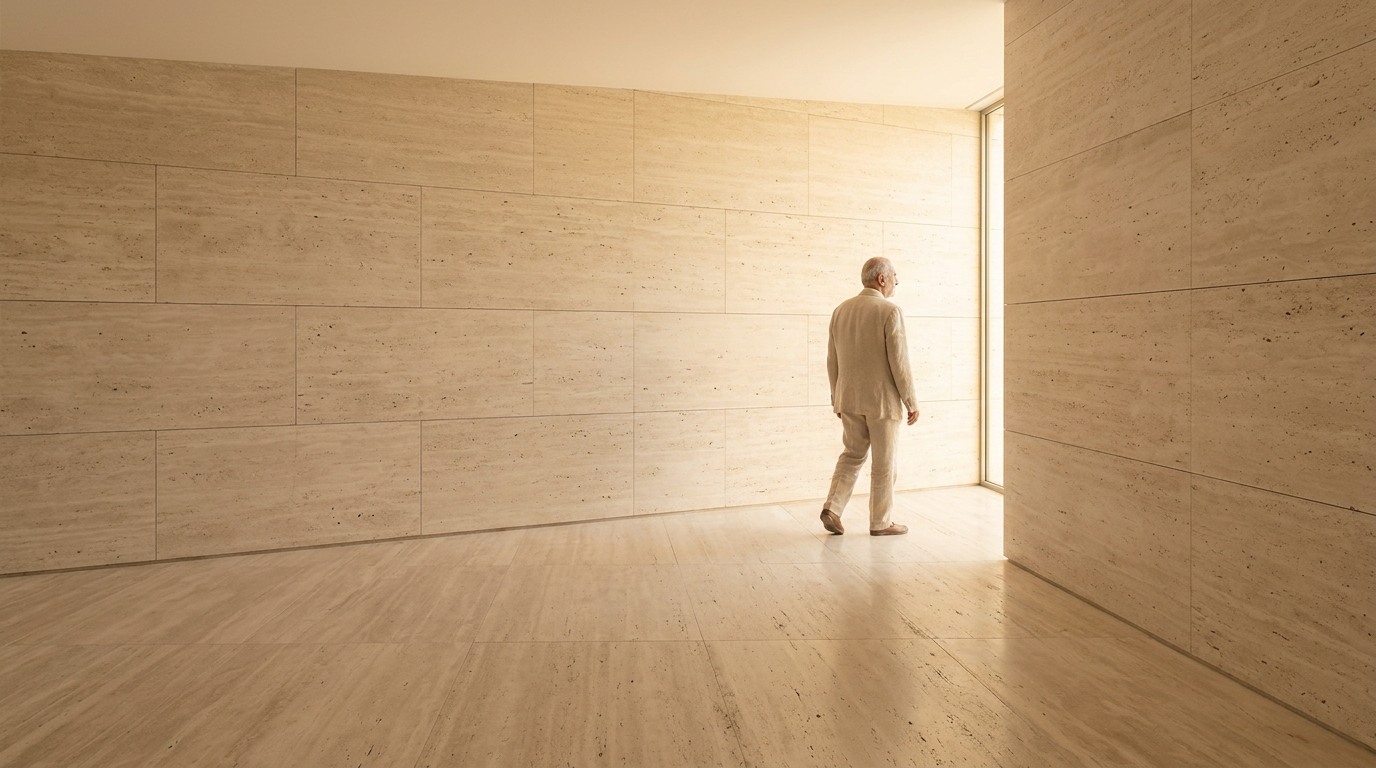
In the lexicon of luxury materials, few substances command the same gravitational pull as travertine. Unlike the clinical uniformity of man-made composites or the aggressive veining of high-contrast marbles, travertine offers a narrative of gradual accumulation. It is a sedimentary stone formed by the precipitation of calcium carbonate from mineral springs, a process that imbues the material with a distinctly perforated, cavernous texture. When architects choose to hone this stone, they are not merely selecting a floor or wall covering; they are inviting a profound dialogue between the interior volume and the slow, inexorable pace of geological time.
The hallmark of superior residential design lies in the ability to bridge the gap between the domestic sphere and the natural world. Travertine acts as the ultimate mediator in this relationship. Because the stone is naturally porous, it requires a mastery of finishing to achieve its full potential. A honed finish, matte and soft to the touch, softens the transition of light across its surface. Unlike polished stone, which reflects light with a mirror-like intensity that can feel exclusionary, honed travertine absorbs and dissipates light. This creates a soft, ambient glow within a room, turning walls into velvet-like canvases that shift in hue as the sun traverses the sky.
The structural integrity of travertine is matched only by its sensory versatility. In large-scale installations, such as expansive gallery halls or sunken living rooms, the stone provides a sense of grounding that is rare in modern construction. One feels the weight of the earth beneath one's feet, a tactile reminder of the material’s origins in the thermal waters of the Italian countryside. This grounding effect is essential in contemporary open-plan homes, where the lack of traditional room dividers can often lead to a sense of spatial instability. By anchoring the floor plane in a material of such density, the architect creates a stable datum from which the rest of the domestic choreography unfolds.
Beyond the floor, the use of travertine in vertical applications demonstrates a keen understanding of spatial depth. When used as wall cladding, the subtle variations in its porous texture create a rhythmic pattern that defies the flatness of drywall. Each microscopic cavity acts as a tiny vessel for shadow, adding a layer of complexity that rewards close inspection. As the inhabitants of the home age, the stone ages alongside them. It is a living material that develops a patina through the simple act of habitation. Oils from touch, the slow deposition of dust, and the subtle wear of daily movement all contribute to a deepening of the stone’s character. This is the antithesis of the static, pristine aesthetic that dominates much of contemporary design.
Designers must consider the stone as a partner in the evolution of the home. When selecting travertine, the focus should be on the density of the grain and the consistency of the voids. A high-quality cut preserves the structural integrity of the block while allowing for the subtle, organic imperfections that define the stone’s beauty. It is the architect’s role to frame these imperfections not as flaws, but as signatures of a prehistoric process. By aligning the vein direction of the stone with the primary axes of the building, the designer can emphasize the linearity of the space, effectively stretching the perspective and making the interior feel more expansive and purposeful.
Ultimately, the inclusion of travertine in a residential project is an exercise in restraint. It requires a commitment to a material that refuses to be ignored, yet avoids the vulgarity of ostentatious display. It is a material for the contemplative resident, someone who values the quiet sophistication of a space that feels as though it has been carved from the landscape itself. As we move toward a future that prioritizes durability and the reduction of the carbon footprint, the use of natural, long-lasting stones like travertine becomes not just a stylistic choice, but an ethical one. It is a celebration of the permanent, the tactile, and the timeless beauty of the earth brought indoors.