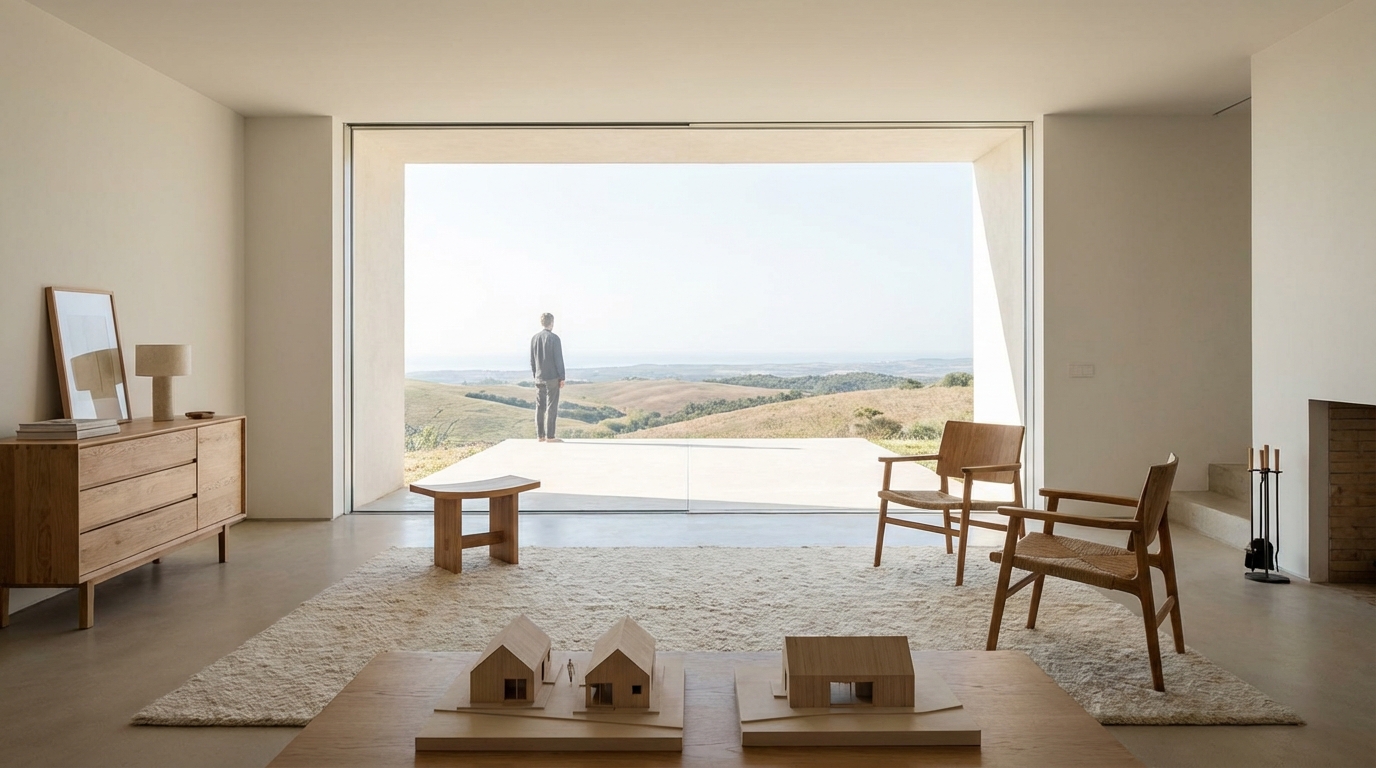
In the discourse of contemporary residential design, we often become preoccupied with the grand gesture: the soaring ceiling, the expansive glass facade, the monumental cantilever. Yet, true architectural significance resides in the subtle mastery of domestic scale. A house is not merely a container for living, but a precision instrument designed to calibrate the relationship between the inhabitant and the horizon. When we speak of scale, we are discussing the physiological comfort of inhabiting a space that understands the reach of an arm, the line of sight from a seated position, and the psychological necessity of enclosure.
The architecture of the intimate requires a disciplined restraint. Too often, architects equate luxury with volume, assuming that height serves as a proxy for status. However, the most profound residential works rely on a compression and release of space that honors the human frame. By lowering a ceiling in a library or a transition corridor, the architect creates a haptic sense of sanctuary. This compression serves as a psychological anchor, grounding the resident before they enter a more expansive social space. It is a rhythmic manipulation of verticality that guides the body through the home with an almost musical cadence.
Consider the placement of windows not as mere portals for light, but as framing devices for the human eye. When a window is positioned precisely at the level of a seated observer, the landscape ceases to be a distant backdrop and becomes an integrated component of the room. This is the art of the human horizon. By aligning structural openings with the natural axis of our gaze, the architect effectively erases the boundary between the interior volume and the external environment. This dialogue is not about merging with nature, but about framing it in a way that remains legible to the occupant.
Materiality serves as the final arbiter of scale. The texture of a wall, the warmth of a grain-matched timber, or the coolness of a honed stone surface dictates how we perceive the size of a room. A cavernous space can feel oppressive if the materials are cold and reflective, yet that same volume can feel inviting if the surfaces possess depth and tactile complexity. We must move beyond the flat, synthetic finishes that currently dominate the market and return to the honest expression of materials that age with grace. The way a surface catches the light at dusk determines whether a room feels like a museum or a sanctuary. Architecture that respects the human scale acknowledges that we are tactile beings who seek surfaces that mirror our own physical reality.
The furniture plan, too, is a structural concern. In exceptional homes, the architecture dictates the placement of objects with such inevitability that the interior seems to have materialized around them. This is the antithesis of the open-plan fetish, which often leaves occupants feeling adrift in a sea of unanchored square footage. Instead, we look for the creation of distinct, defined zones that acknowledge our need for belonging. A fireplace hearth, a deep window seat, or a recessed dining alcove provides a sense of place that is essential for long-term domestic contentment. These are not merely functional additions, but structural assertions of the resident’s place within the larger composition of the house.
Ultimately, a home succeeds when it reconciles the vastness of the exterior world with the finite nature of the individual. It is a project of reconciliation. We require a residence that offers the expansive spirit of architecture while simultaneously providing the soft, enveloping comfort of a protected inner life. By prioritizing the human horizon over the spectacle of sheer volume, we create living spaces that offer lasting solace. This approach transcends the ephemeral trends of the current era, focusing instead on the timeless requirement of the soul to feel both connected to the world and safely held within the architecture of its own making. To build well is to build with a profound awareness of the body, recognizing that every wall, window, and floor plane is an opportunity to enhance the dignity of the human experience within the domestic sphere.