The domestic landscape is frequently defined by its transience: the thinness of drywall, the fragility of glass, and the lightness of steel. However, a significant shift is occurring in the realm of high-end residential renovation as architects return to the most primal of building blocks: the earth itself. Rammed earth, or pisé, offers a tectonic weight that cannot be replicated by synthetic finishes, providing a sense of sanctuary that feels both ancient and radically modern. This is not merely a choice of material but an ideological stance on the craft of building and the relationship between a home and its site.
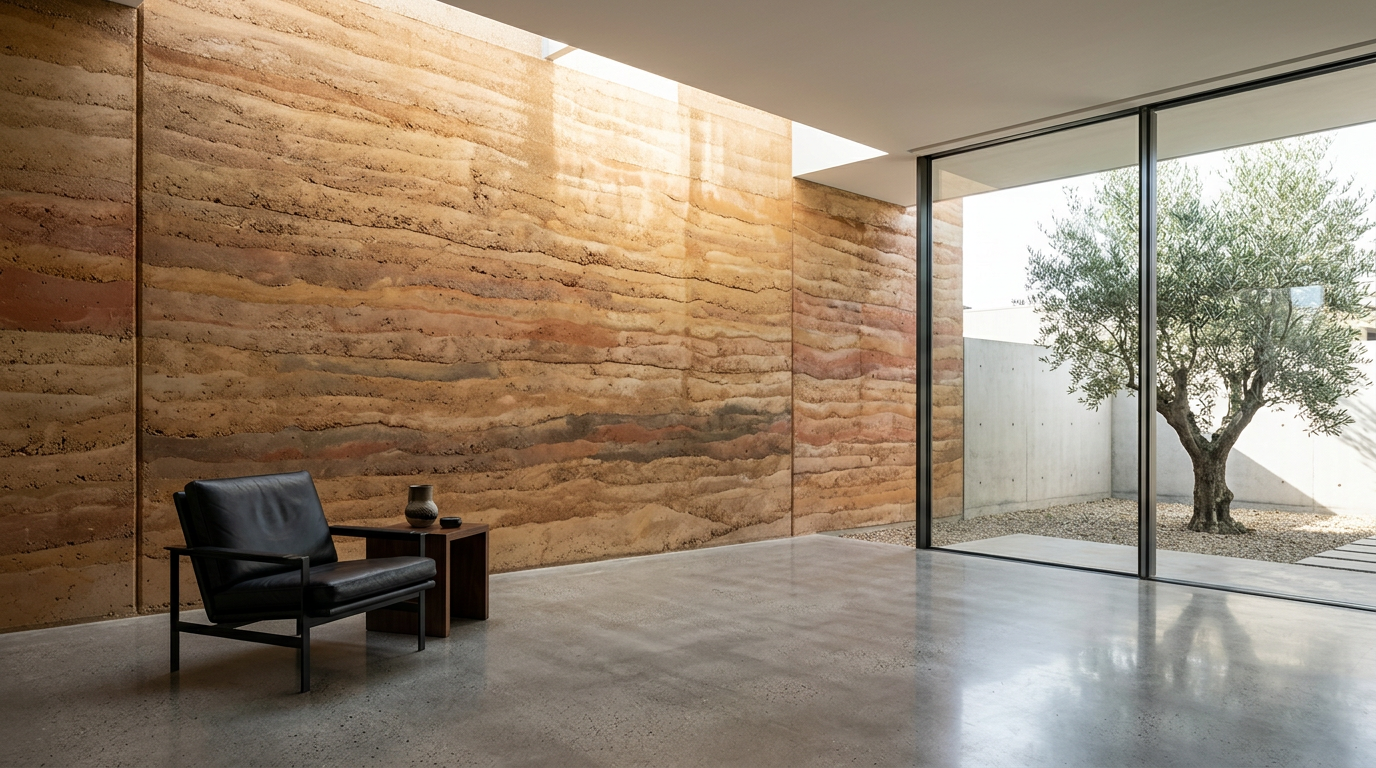
In a recent renovation that serves as a masterclass in this medium, the architect did not simply add a new wing; they introduced a structural core of compressed soil that anchors the entire residence. The process is one of physical intensity, involving the rhythmic compression of earth, aggregate, and a stabilizing agent within a rigid formwork. The result is a monolithic wall that reveals the history of its making through visible horizontal striations. These layers, reminiscent of sedimentary rock, create a visual narrative of the construction process, where each lift of earth represents a moment of manual labor and material transformation.
One of the most compelling reasons to introduce rammed earth into a renovation is its extraordinary thermal performance. In an era where mechanical climate control is often the default, the thermal mass of a thick earth wall provides a natural alternative. The material possesses a high thermal lag, meaning it absorbs heat during the day and slowly releases it into the interior during the cooler evening hours. This creates a stable internal microclimate that feels fundamentally different from the recycled air of a standard HVAC system. To touch the wall is to feel the cool, dense heart of the building, a tactile experience that connects the inhabitant to the physical reality of the structure.
Spatially, the introduction of rammed earth allows for a play of depth and shadow that thin-walled construction lacks. Deep window reveals can be carved directly into the mass, creating sculptural apertures that frame the landscape like a curated gallery. In the renovation context, these thick volumes provide a profound contrast to the existing lightweight framing of the original house. The dialogue between the old structure and the new earthwork is one of balance: the earth provides the gravity, while the original architecture provides the historical context. It is a conversation between the ephemeral and the eternal.
The aesthetic of rammed earth is inherently tied to its provenance. Because the soil is often sourced locally, the color palette of the walls is a direct reflection of the surrounding geography. From the deep ochres of the desert to the muted greys of a coastal site, the material ensures that the renovated home is literally of its place. This honesty of material eliminates the need for paint, wallpaper, or additional cladding. The wall is the finish. This reductionist approach aligns with a broader movement toward architectural honesty, where the structure is allowed to speak for itself without the intervention of decorative layers.
Acoustically, the density of the earth provides a level of silence that is rare in modern residential design. The mass absorbs sound rather than reflecting it, creating a hushed, cathedral-like atmosphere that is particularly effective in open-plan renovations. When combined with minimalist interior elements, such as raw timber or polished concrete, the rammed earth wall becomes a quiet protagonist, a backdrop that enhances the sensory experience of the home. It is a reminder that the most sophisticated architectural solutions are often the ones that have been under our feet all along. By integrating this ancient technique into a modern renovation, architects are proving that the future of the home lies in its ability to ground us in the physical world.