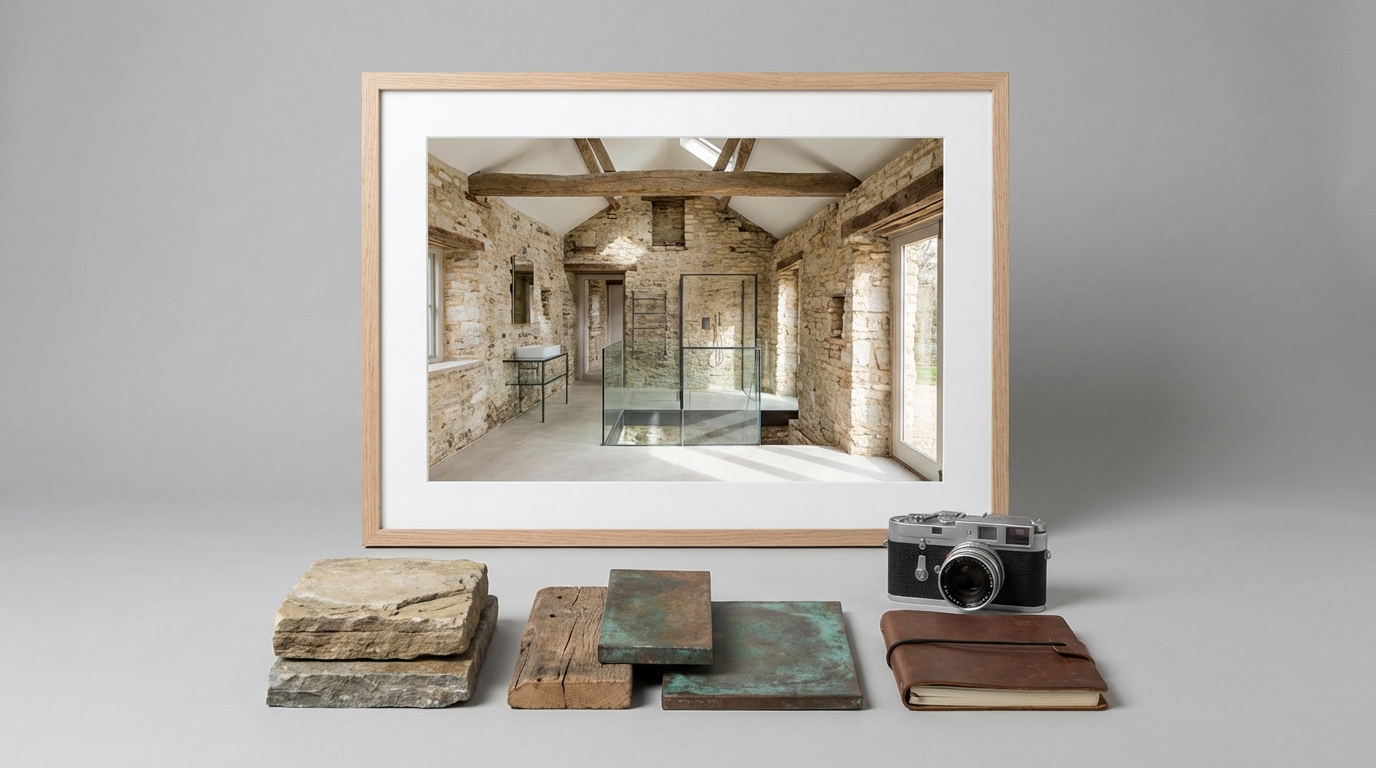
Architecture often suffers from the delusion that a building must be a pristine, static object. We seek to erase the marks of time, sandblasting stone until it loses its character and replacing oxidized metals with sterile, uniform alloys. Yet, the most profound residential works are those that embrace the concept of palimpsest. This is the art of layering, where the architect acts not as a god creating from the void, but as a curator of existing narratives. When we approach a site that bears the weight of previous iterations, we are presented with a unique opportunity to engage in a conversation with the ghosts of the craftspeople who came before us.
The inherent value of patina lies in its ability to ground a structure within the temporal flow of its environment. A wall that has weathered a century of thermal expansion and contraction possesses a rhythmic irregularity that no modern machine can replicate. By preserving these elements, we avoid the trap of architectural amnesia. The goal is not to force a seamless transition between old and new, which often results in a dishonest mimicry of history, but to create a sharp, intentional friction. When a polished concrete floor meets a jagged, lime-washed masonry wall, the contrast forces the observer to acknowledge the material evolution of the home. This tension is where the significance of the dwelling resides.
Consider the role of the material trace. Whether it is the ghost of a removed partition visible in the floorboards or the subtle discoloration of stone near a hearth, these markers serve as anchors. They remind us that a home is a living entity, subject to the same processes of aging and adaptation as the inhabitants themselves. To design with this awareness is to reject the ephemeral nature of current trends in favor of a long-term ecological and cultural responsibility. We build better when we acknowledge that our work is merely a temporary chapter in a much longer autobiography of the site.
Spatial hierarchy is often dictated by the constraints of what remains. When an architect works within the shell of a pre-existing structure, they are forced to innovate within strict boundaries. This is where the most creative solutions emerge. A window placed to capture a specific, century-old view, or a staircase reconfigured to negotiate an existing structural pier, becomes a testament to rigorous problem solving. These decisions are not merely functional, as they represent a deep respect for the structural intelligence of the past. The craft of building is fundamentally about understanding the limitations of materials, and by retaining original components, we learn the limits of those who built before us.
The integration of modern systems into these layered environments requires a surgical, rather than a heavy-handed, approach. Concealing HVAC infrastructure or electrical conduits within the voids of original masonry demonstrates a commitment to structural honesty. It is a refusal to shroud the building in the false perfection of drywall. Instead, we allow the bones of the house to dictate the logic of the renovation. This is the antithesis of the decorator mentality, which seeks to hide the mechanics of living. Here, the mechanics become part of the aesthetic, integrated into the life of the home like the circulatory system of a complex organism.
Ultimately, the most significant residential architecture is that which invites the future to continue the conversation. We must resist the urge to complete a home, to declare it finished and static. Instead, we should provide a framework that allows for the accumulation of further layers. By using materials that age with grace, such as raw timber, untreated metals, and natural stone, we ensure that the building will continue to evolve long after we have departed. A home should be a vessel for time, capturing the light and the history of its surroundings in equal measure. In this way, we do not merely occupy space, we participate in the ongoing creation of culture, ensuring that the dialogue between the ruin and the restoration remains vibrant, relevant, and deeply human.