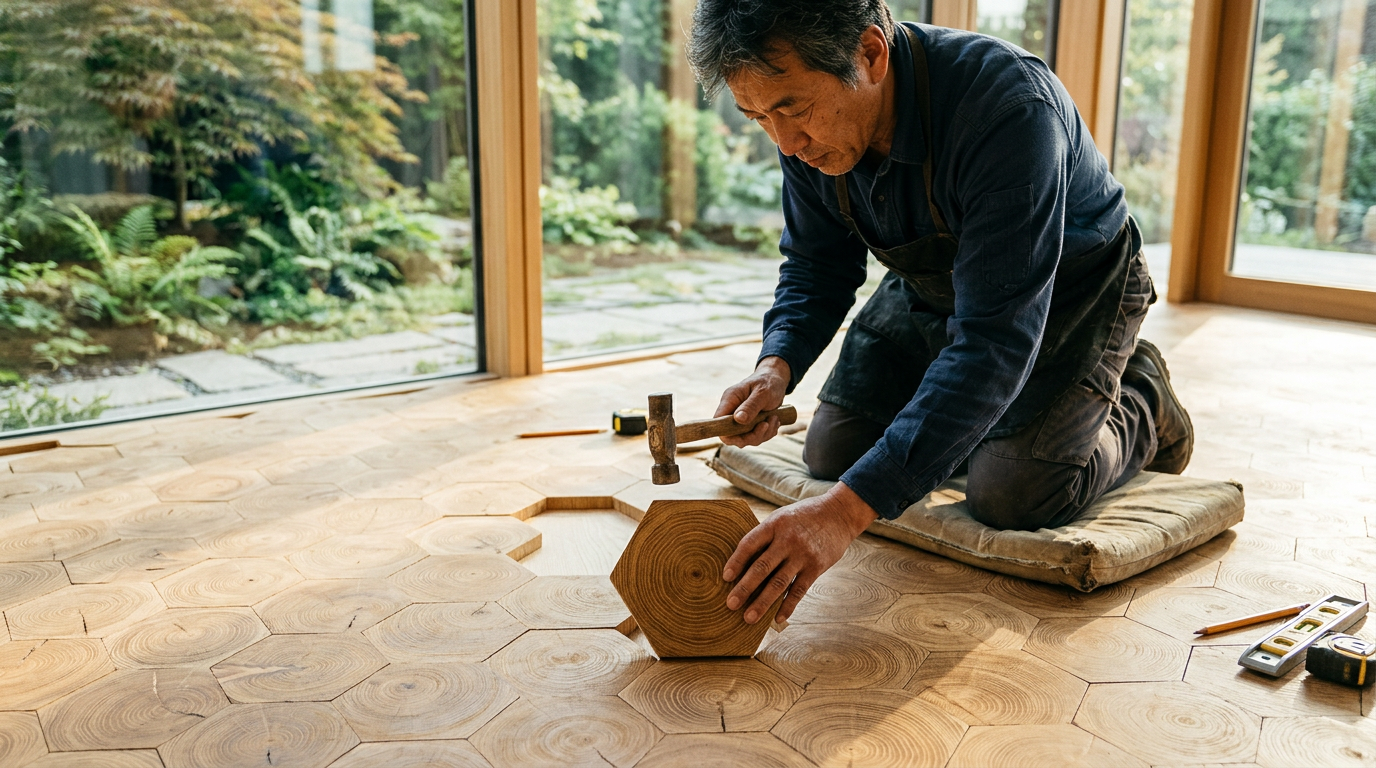
In the lexicon of domestic materiality, wood is often viewed as a unidirectional entity. We speak of grain patterns, the flow of longitudinal fibers, and the long, sweeping stretches of oak or walnut that define the rhythm of a floor. Yet, there exists a neglected frontier in the anatomy of timber: the end grain. When a tree is cross-cut, the resulting surface reveals the dense, circular architecture of its internal life. This is not merely a byproduct of the sawmill, but a structural powerhouse that, when treated with the precision of high architecture, transforms a residence into an acoustic sanctuary.
End grain blocks operate on a principle of compression rather than tension. Because the fibers are oriented vertically, the material possesses a density that defies the typical expansion and contraction cycles of standard planks. In a residential context, this translates to a surface that is remarkably resilient. It absorbs the impact of daily life with a quietude that traditional hardwood floors cannot replicate. Stepping onto an end grain floor feels distinct, as the vertical orientation of the wood cells creates a microscopic spring effect. It is a tactile experience that bridges the gap between industrial durability and domestic comfort.
The aesthetic dialogue created by end grain is inherently complex. Each block acts as a singular unit within a larger mosaic, displaying the unique history of the tree through its concentric rings. When installed, these blocks form a pattern that is at once rhythmic and chaotic, a visual representation of nature’s own geometric logic. In a minimalist interior, this texture serves as a primary decorative element, negating the need for ornamentation. The floor becomes a landscape of depth, where light is caught in the porous ends of the fibers, creating a subtle, shifting chiaroscuro that changes as the sun traverses the room.
The craft of installing end grain requires a reverence for the material. It is not a task for the hasty. Each piece must be meticulously leveled and sealed to honor its unique cellular structure. When done correctly, the result is a monolithic surface that feels as though it were grown rather than assembled. This is where the dialogue between the structure and the occupant becomes most intimate. The floor acts as a silent witness to the inhabitants, absorbing the vibrations of footsteps and the echoes of conversation, effectively softening the acoustic profile of a space. In a world of hard surfaces and sound-reflective glass, this is a profound luxury.
Beyond its acoustic and tactile benefits, end grain timber represents a sustainable ethos. It allows for the utilization of smaller timber sections that might otherwise be discarded in the production of wide-plank flooring. By embracing the entirety of the log, architects can design spaces that reflect a more holistic relationship with the forest. It is a material that demands we look closer, that we appreciate the micro-architecture of the botanical world. It forces a pause in the visitor, a moment to register that the ground beneath them is not merely a substrate, but a living history of growth, climate, and time.
Ultimately, the choice to incorporate end grain into a residential project is an act of intellectual rigor. It rejects the homogeneity of mass-produced finishes in favor of a material that is challenging, tactile, and deeply resonant. As we move toward a future that values longevity and sensory depth, the end grain block stands as a testament to the idea that the most sophisticated design solutions are often found by changing our perspective on the simplest materials. It turns the floor into a stage, not for show, but for the quiet, meaningful performance of domestic existence.