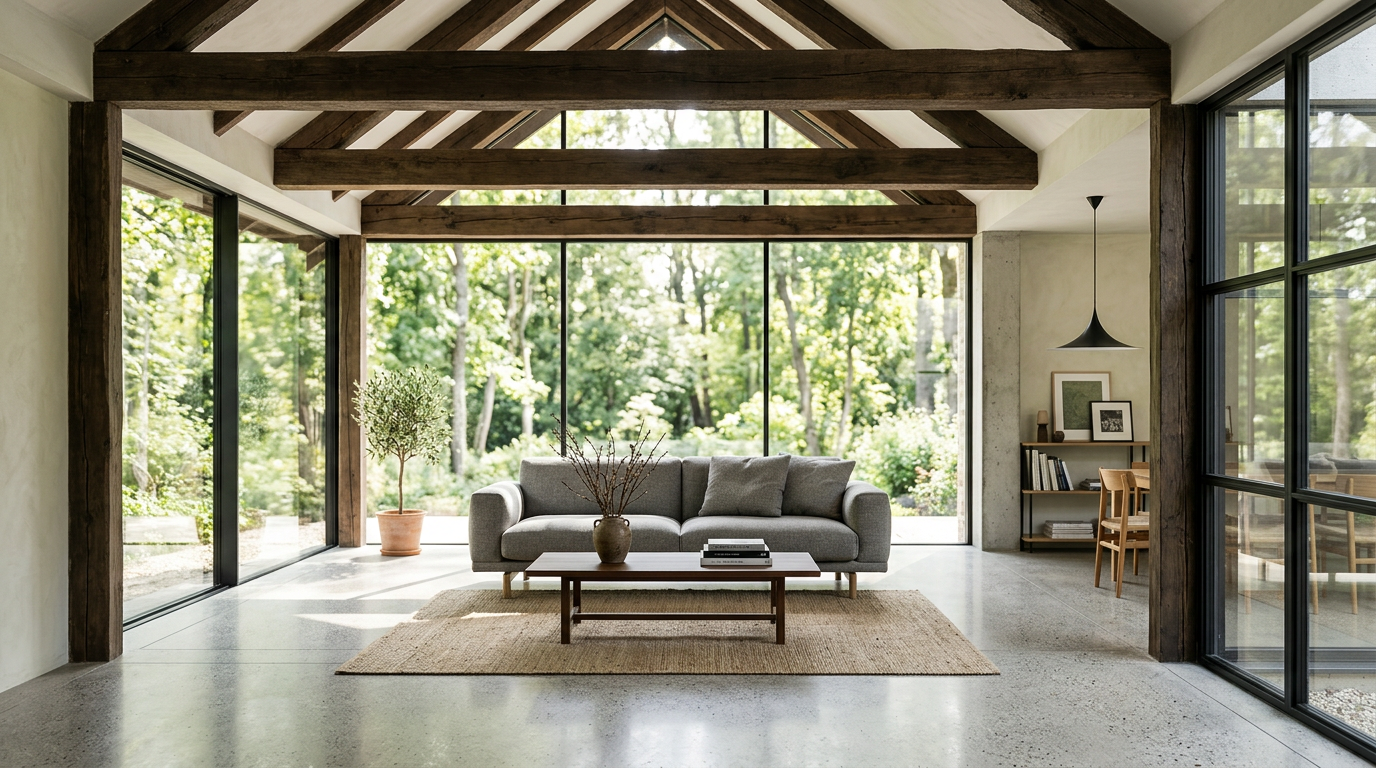
Architecture often finds its most profound expression when the skin of a building is peeled away to reveal the skeletal truth beneath. In a recent residential project located within a dense, temperate forest, the design team approached the renovation not as an imposition of modern aesthetics, but as an archaeological excavation of structural intent. The property, originally conceived as a modest shelter of heavy timber, had suffered under decades of cosmetic partitions and faux-finish veneers. The renovation serves as a manifesto for structural transparency, proving that the most luxurious material in any home is the integrity of the frame itself.
The primary challenge lay in recalibrating the relationship between the load-bearing members and the interstitial voids. By removing non-structural secondary walls, the architects transformed a series of fractured, claustrophobic rooms into a singular, fluid landscape of activity. This spatial liberation allows the eye to trace the rhythmic cadence of the Douglas fir posts from the entry vestibule to the deepest reaches of the living area. The timber, stripped of synthetic lacquers and returned to a matte, breathable state, acts as the primary anchor for the interior atmosphere. It is a reminder that when materials are left in their honest state, they acquire a patina of history that no manufactured surface can replicate.
Light functions here as a tactile element rather than a simple utilitarian necessity. Because the building occupies a site defined by a high canopy of evergreen trees, the quality of illumination is inherently diffuse. The designers capitalized on this by installing expansive, frameless glazing units that meet the timber structure with surgical precision. These glass interfaces do not compete with the wood; instead, they act as neutral apertures that frame the external landscape like a series of living canvases. Throughout the day, the shifting shadows cast by the exterior branches create a secondary architecture on the interior floors, effectively blurring the distinction between the built environment and the organic growth surrounding it.
Materiality is treated with a deliberate, hierarchical approach. While the primary structure remains the protagonist, the secondary elements provide the necessary tension to define the space. Polished concrete floors, chosen for their thermal mass and reflective properties, provide a cool, grounded contrast to the warmth of the overhead beams. This dialogue between the earthbound floor and the sky-reaching frame creates a vertical tension that is essential for a balanced residential experience. Cabinetry and millwork are executed in blackened steel and white oak, maintaining a restrained palette that allows the grain of the primary timber to remain the focal point of the visual narrative.
The art of the renovation lies in the restraint of the intervention. Every decision was filtered through the lens of longevity and environmental dialogue. Rather than installing climate-control systems that would require dropping ceiling heights and obscuring the rafters, the architects opted for a geothermal loop and radiant heating integrated into the slab. This choice preserves the original volume of the house and reinforces the commitment to a low-impact, high-performance dwelling. By prioritizing the structural skeleton over decorative ornamentation, the home becomes a vessel for quiet contemplation.
For those seeking to renovate historic or structurally significant properties, the lesson is clear: do not fear the bones of the building. Authenticity is found in the willingness to let the structure speak for itself. When you strip away the layers of past trends and temporary fashions, you are often left with a framework that possesses its own inherent grace. This residence stands as a testament to the idea that architecture is not merely about creating space, but about revealing the inherent beauty of the spaces we already occupy. Through the careful curation of light, the preservation of original materiality, and a commitment to structural honesty, the house has transitioned from a dated relic into a timeless piece of habitable sculpture that will undoubtedly resonate for generations to come.