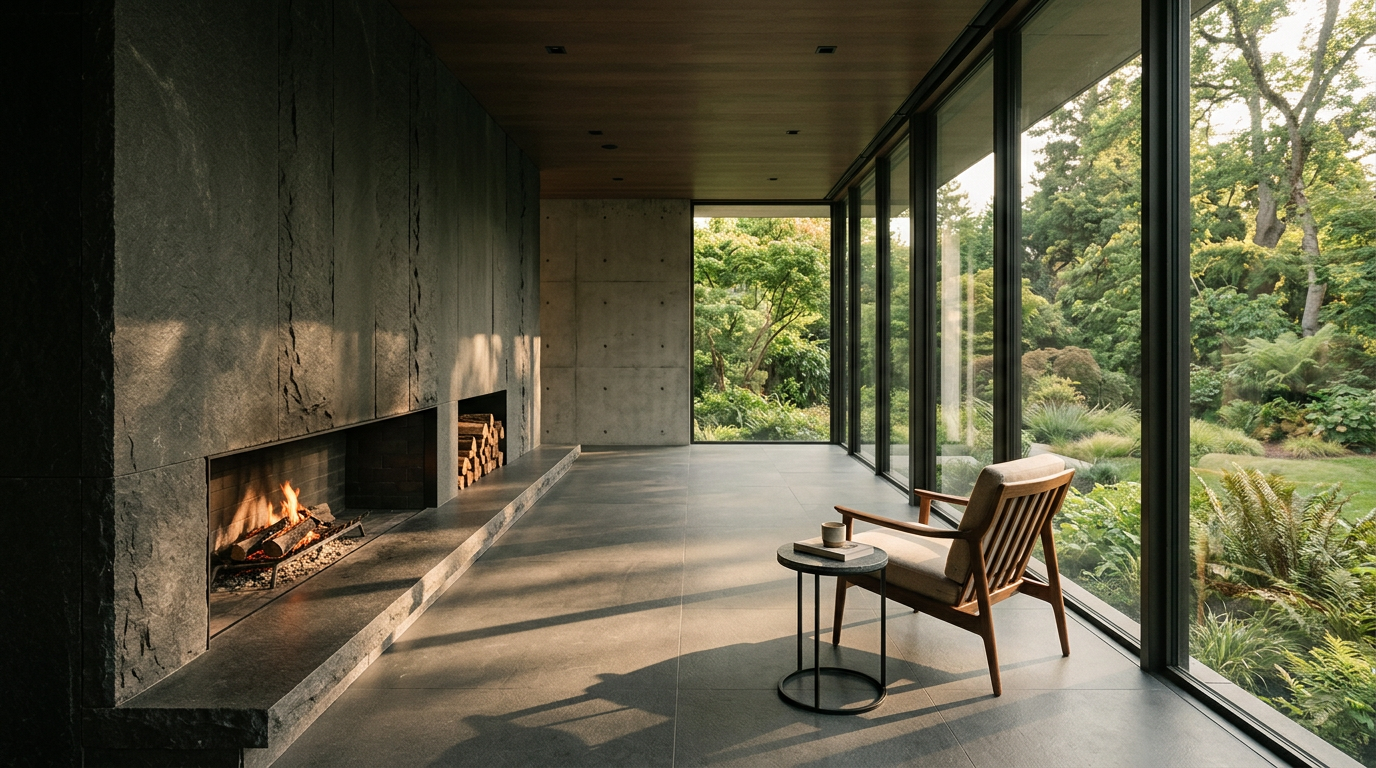
In the high-stakes world of residential renovation, the most radical gesture is often the one that retreats. When approaching the transformation of a mid-century structure, many architects succumb to the urge to expand or to glass-box the perimeter in pursuit of transparency. However, the true mastery of space lies in the choreography of enclosure. This project stands as a testament to the power of subtraction, where the architectural narrative is defined not by what was added, but by the relentless refinement of what remained.
The primary challenge was to reconcile the home with its own history while stripping away the decorative accretions of subsequent decades. The architects opted for a palette centered on raw, tactile materials that engage in a quiet dialogue with the natural environment. The flooring is composed of monolithic slabs of honed basalt, a choice that grounds the living area in a visceral sense of mass. By extending this stone threshold past the glazed facade and into the terrace, the boundary between the interior volume and the external topography dissolves. This is a deliberate manipulation of the viewer's perception, creating an expansive horizon that feels both intimate and infinite.
Spatial relationships are dictated by the interplay of light and heavy mass. The central staircase, a sculptural intervention of blackened steel, serves as the spine of the house. It does not merely facilitate movement between levels but acts as a vertical axis that anchors the disparate rooms. The precision of the joinery is a nod to the craft of traditional cabinetmaking, yet the form remains resolutely modern. Light is invited into the core through a series of carefully calibrated skylights that trace the movement of the sun across the walls. This creates a shifting geometry of shadow, ensuring the house is never static. As the day progresses, the texture of the plaster walls becomes increasingly pronounced, revealing the subtle imperfections that define a hand-applied finish.
The kitchen, often the site of the most aggressive modernization, here becomes a study in monastic utility. There are no upper cabinets to disrupt the horizontal lines of the architecture. Instead, storage is entirely integrated into a continuous wall of white oak, the grain of which provides a warm, organic counterpoint to the coolness of the basalt floors. The island is carved from a single block of quartzite, its veining echoing the rugged stone formations found in the surrounding landscape. By eschewing hardware and visible appliances, the kitchen functions less as a utilitarian zone and more as a gallery for the act of living.
The dialogue between structure and landscape is the defining element of a successful renovation. In the primary suite, the windows have been positioned to frame specific vistas, turning the garden into a series of curated vignettes. The use of floor-to-ceiling glass is tempered by deep roof overhangs, which provide a necessary sense of shelter. This architectural device protects the interior from the harshness of direct sunlight while ensuring that the inhabitants remain tethered to the rhythms of the seasons. It is a lesson in climate-conscious design that feels entirely natural, devoid of the performative technology that often clutters contemporary homes.
Ultimately, this renovation serves as a reminder that architecture is a medium for stillness. By prioritizing the integrity of materials and the quality of light, the designers have created a residence that functions as a cultural artifact. It does not demand attention through spectacle. Instead, it invites a slower, more deliberate way of inhabiting space. The success of the project lies in its ability to age gracefully, gaining character as the materials weather and the light continues its daily ritual upon the surfaces. It is a work of architectural discipline, proving that when the unnecessary is stripped away, what remains is the essential poetry of living.