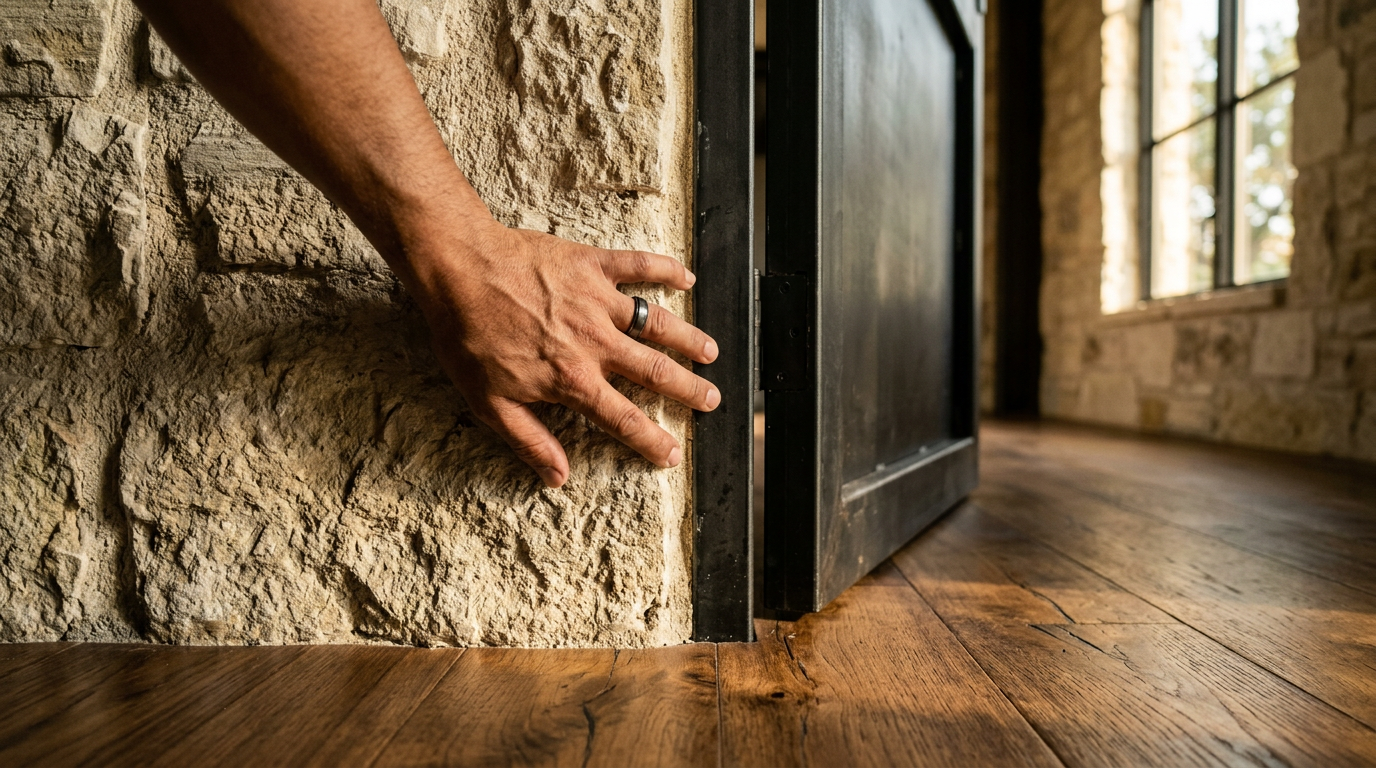
In the contemporary rush toward ephemeral interiors and high-gloss finishes, the enduring power of a home often resides in its capacity to age with grace. Architecture is not merely the enclosure of space, but the curation of a tactile dialogue between the occupant and the built environment. When we speak of a house as a cultural artifact, we are discussing the deliberate choice of materiality and the honest expression of how a structure holds itself together against the pull of gravity. The most significant residences are those that refuse to hide their skeleton, opting instead to celebrate the confluence of raw timber, honed stone, and oxidized metal.
The integrity of a material palette defines the emotional resonance of a room. When a designer selects a slab of travertine or a length of reclaimed oak, they are making a commitment to the passage of time. Unlike synthetic alternatives that degrade into obsolescence, natural materials possess a capacity for patina. This process is not a decay, but a refinement. As surfaces absorb the oils of a human hand or the subtle shifts in humidity, they tell the story of the household. A home that is designed to be touched is a home that invites a deeper form of residency. The choice of a matte finish over a polished one is a philosophical decision: it favors the warmth of the human experience over the cold perfection of the showroom.
Spatial relationships are governed by the rigor of the structural grid. In exceptional residential design, the joinery becomes the ornamental language of the house. We see this in the way a steel beam might meet a concrete wall, or how a floating staircase is anchored into a shear plane. These moments of connection represent the intersection of engineering and art. By exposing the means of construction, an architect honors the craft of the builder. There is a profound honesty in a visible bolt or a meticulously sanded timber notch. It signals to the inhabitant that this building was conceived with intention and executed with precision. It transforms a domestic space from a backdrop for daily life into an active participant in the narrative of the home.
Furthermore, the dialogue between the interior and the exterior must be handled with architectural restraint. A successful house does not merely frame a view, but creates a transition that softens the boundary between the private sanctuary and the wildness of the landscape. This is often achieved through the extension of interior flooring materials onto a terrace, or the continuation of a ceiling plane beyond the glass line. The blurring of these thresholds expands the perception of volume while grounding the structure in its specific geography. It is about creating a sense of place that is rooted rather than superimposed. When the architecture acknowledges the local climate and the specific orientation of the sun, the home begins to function as a living organism rather than a static object.
Ultimately, the significance of a residential project lies in its ability to foster a sense of permanence. We live in an era of rapid consumption, yet the best architecture provides a counterweight to this instability. It requires a commitment to quality over quantity and a focus on the essential components of shelter. By stripping away the superfluous and focusing on the tactile quality of surfaces, the structural logic of the plan, and the honest assembly of parts, we create homes that endure. These are the spaces that remain relevant long after the trends of the moment have faded. They offer a quiet, steadfast stability that serves as a foundation for the lives lived within them, proving that the most profound luxury is a building that honors its own existence through the dignity of its construction.