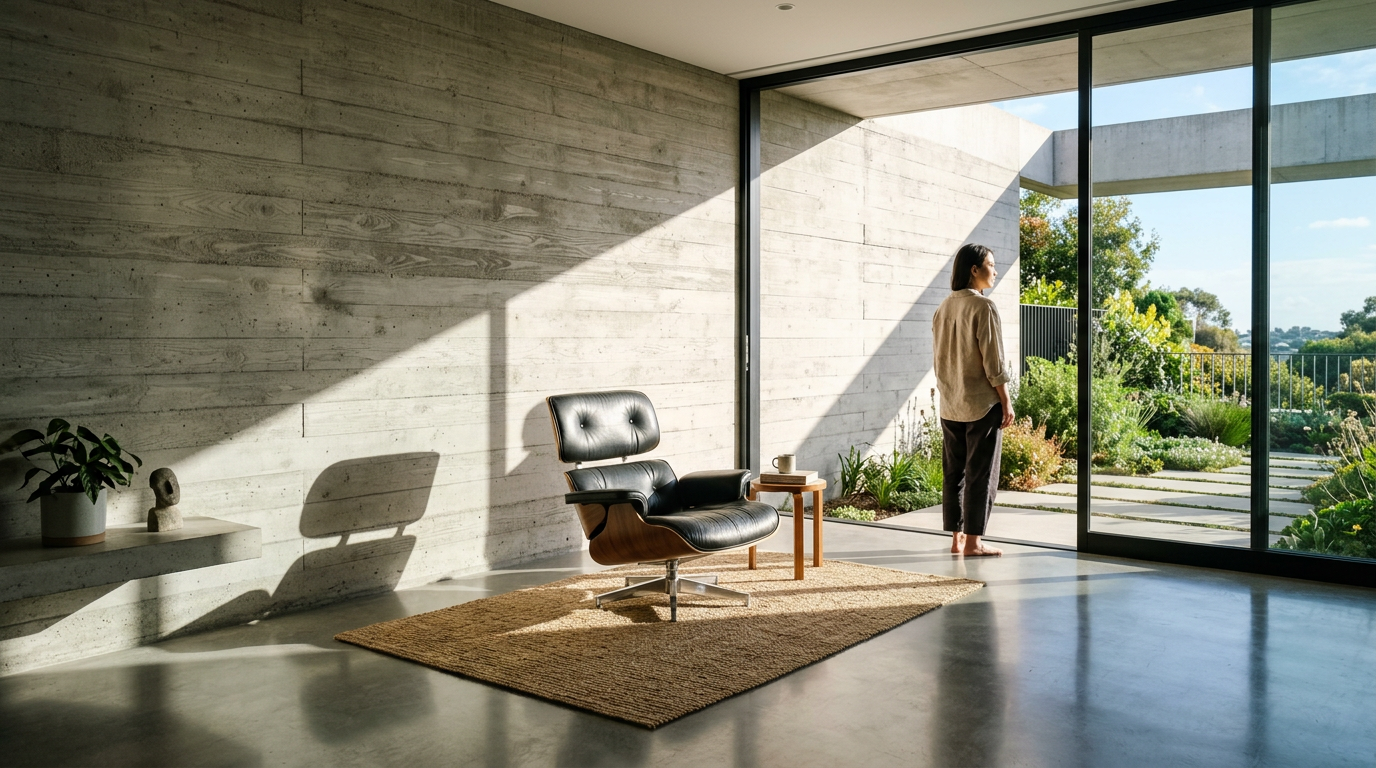
In the lexicon of modern domestic architecture, few materials provoke as visceral a response as cast-in-place concrete. It is a medium of paradox, beginning as a viscous, amorphous slurry and hardening into an immutable geological presence. When handled with the precision of a master craftsman, concrete ceases to be a mere structural substrate. Instead, it becomes a canvas for the interplay of light and shadow, a vessel for spatial narrative, and a testament to the honesty of construction. The architectural significance of concrete lies in its ability to embody the exact moment of its own creation, preserving the imprint of the timber formwork within its smooth, mineral face.
The inherent beauty of concrete rests in its texture. When a wall is poured, the grain of the wood planks used to contain the wet mixture is permanently embossed onto the cooling surface. This transfer of organic pattern to inorganic stone creates a sophisticated juxtaposition. We are reminded that the building was once a fluid idea, shaped by the hands of workers and the constraints of temporary wooden armatures. To touch a wall of high-quality architectural concrete is to feel the history of the build process itself. It is a material that demands intellectual engagement, as it forces the occupant to acknowledge the rigor required to achieve such seamless, monolithic forms.
Light is the essential partner to concrete. Because the material possesses a high thermal mass and a muted, neutral palette, it acts as a quiet resonator for the shifting quality of sunlight. Throughout the day, the angular geometry of a concrete interior transforms. In the early morning, soft rays emphasize the subtle variations in aggregate density and the crispness of sharp-edged corners. By midday, the material absorbs the brilliance of the sun, radiating a calm, steady temperature that regulates the domestic environment. As evening approaches, the shadows stretch across the surfaces, highlighting the depth of the finish and turning the room into a study of greyscale tonality. The interplay of light and space within a concrete structure is not merely decorative, it is foundational to the experience of dwelling.
Designers who utilize concrete effectively understand the importance of thermal bridge management and the necessity of high-quality mix design. The choice of aggregate, from fine sand to larger river pebbles, dictates the character of the final surface. When polished, the material takes on a luster that rivals fine marble, yet it retains a grounded, approachable quality. When left raw, it speaks to the elemental origins of architecture. The key is in the transition zones where concrete meets glass or timber. These junctions define the spatial boundaries of the home. A floor-to-ceiling glass panel sliding into a recessed concrete track creates a seamless threshold between the interior sanctuary and the exterior landscape. This dialogue between the heavy, unmoving stone and the light, transparent void is what elevates a house from a functional shelter to a work of art.
True architectural significance emerges when a material is treated with reverence for its limitations. Concrete should never be forced to mimic other surfaces. Its strength is found in its brutalist integrity, its ability to span vast distances without the need for excessive ornamentation, and its capacity to age with a dignity that few synthetic materials can replicate. Over time, concrete develops a patina, absorbing the history of the climate it inhabits. It grows darker, richer, and more integrated into the surrounding landscape. To live within concrete walls is to enter into a long-term commitment with the building. It is a material that rewards patience and rewards those who value permanence over the fleeting trends of contemporary design. By prioritizing the structural honesty of cast-in-place concrete, architects create environments that serve as cultural artifacts, anchoring the resident in a space that feels both timeless and deeply connected to the earth from which its components were sourced.