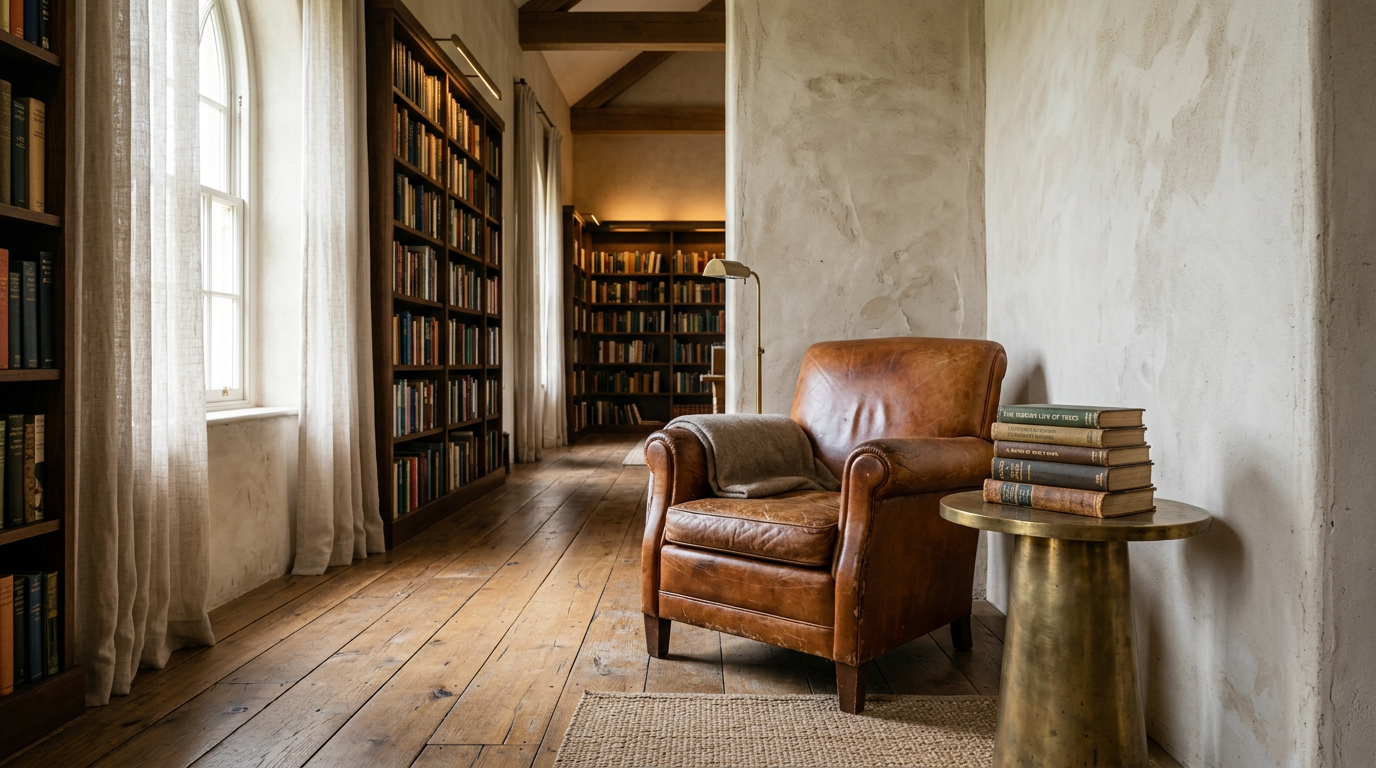
In the contemporary pursuit of the flawless interior, we often mistake sterility for sophistication. We obsess over the crisp edge and the unblemished finish, forgetting that a home functions as an organism rather than an exhibit. The most resonant interiors are those that embrace the concept of living materiality. This is the art of curating a space that anticipates the gentle erosion of daily life, where the architecture serves as a substrate for the inevitable collection of stories written in wood grain, oxidized metal, and softening stone.
The philosophy of the lived-in surface centers on the selection of materials that possess an inherent capacity for transformation. When a designer chooses a floor of reclaimed oak or a countertop of unsealed marble, they are not merely selecting a finish. They are establishing a partnership with time. These materials do not resist the environment. Instead, they absorb the light, the oils from a hand, and the occasional scratch, integrating these markers into their aesthetic identity. This evolution is what we define as patina, a visual record of a home's history that no manufactured product can replicate through artificial distressing.
Consider the tactile quality of raw, oil-rubbed bronze hardware. In the first week, it captures the fingerprints of its inhabitants with startling clarity. By the second year, those points of contact have burnished into a deep, lustrous glow, while the recesses remain dark and matte. This creates a topographical map of movement throughout the house, revealing the paths most traveled and the doors most often opened. It is a subtle, subconscious indicator of domestic intimacy. It reminds us that a house is a place where lives are enacted, not a static gallery where movement is discouraged.
Material honesty requires a departure from the synthetic. Designers must look toward substances that react to their surroundings. Limestone, when used for flooring, captures the shadows of furniture as it drifts across the room, eventually developing a satin sheen in high-traffic corridors. Leather upholstery, if vegetable-tanned and untreated, darkens to the shade of a well-worn saddle, gaining suppleness as it conforms to the posture of those who sit upon it. These materials possess a gravity that commands respect. They demand that the inhabitants move through the space with intention, acknowledging that their presence has a physical impact on their surroundings.
The integration of these materials requires a disciplined hand. One cannot simply fill a room with aging objects and expect cohesion. The success of this approach lies in the tension between the architectural frame and the organic furniture within it. A stark, plaster-walled envelope provides the necessary stillness to allow a mahogany table, scarred by decades of family dinners, to become the focal point of the room. The architecture acts as the silent witness, while the furnishings carry the narrative weight. This dialogue between the permanent and the temporary is what gives a residence its soul.
There is a profound psychological benefit to this approach. When we remove the fear of damaging our surroundings, we allow ourselves to relax. A home designed for permanence is often a source of anxiety, as every spill or scrape feels like a failure of maintenance. A home designed for patina is an invitation to inhabit. It suggests that the beauty of the room is not fragile. It is cumulative. We must shift our perspective to view the darkening of a wood floor or the etching of a stone surface as an enhancement rather than a degradation. These are the signatures of a life well lived, rendered in the physical language of the home.
Ultimately, the most successful residential projects are those that look better after a decade of occupancy than they did on the day of completion. This requires a rejection of the disposable in favor of the durable, and a rejection of the pristine in favor of the profound. By choosing materials that invite the touch, we create spaces that do not just accommodate our lives, but participate in them. We build not for the photograph, but for the legacy of the everyday.