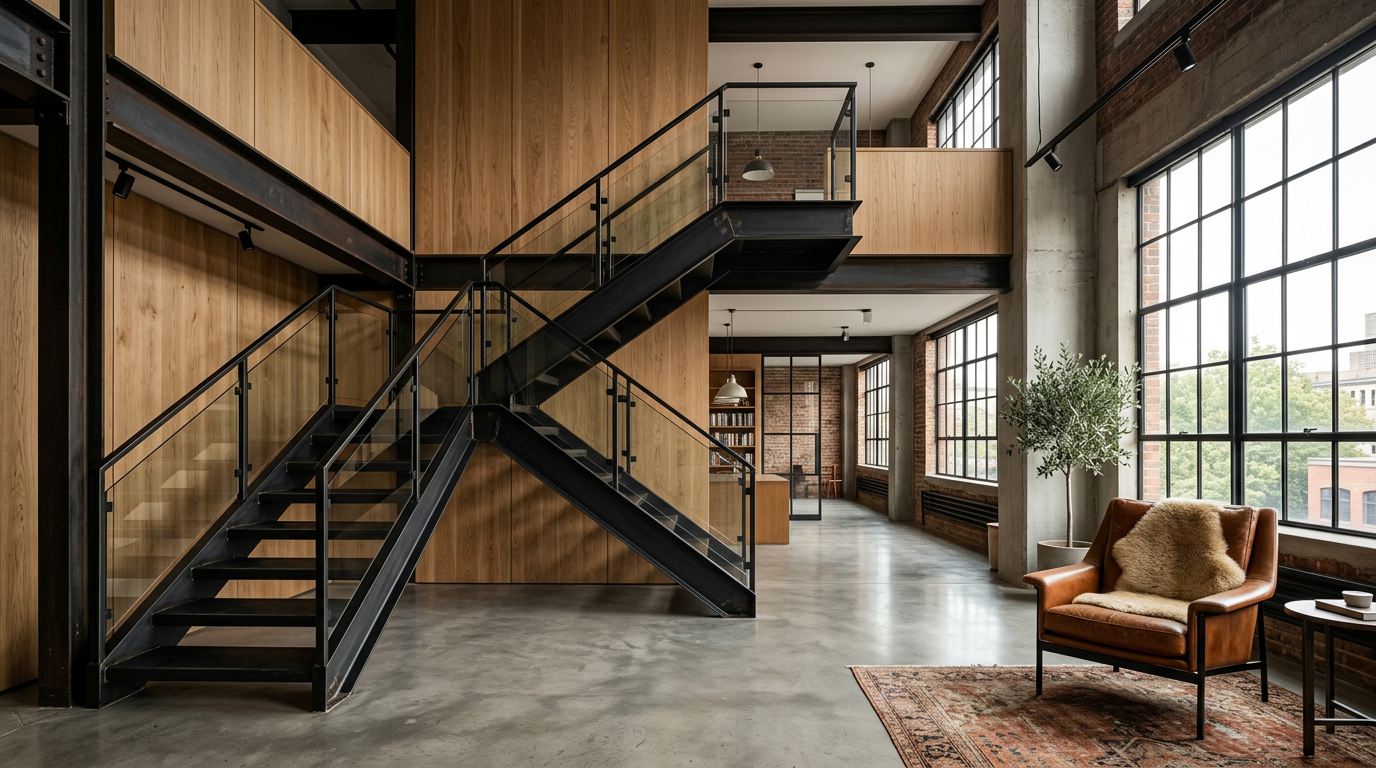
Architecture is frequently misunderstood as a static pursuit of permanence, yet the most compelling residential spaces are those that acknowledge the passage of time through the deliberate curation of patinated surfaces. In this recent transformation of a decommissioned metalworking shop, the design team opted for a philosophy of aggressive preservation. Rather than sanitizing the history of the structure, they chose to elevate the oxidation of iron and the structural honesty of cold rolled steel into the primary aesthetic language of the home. This is not merely an exercise in industrial chic, but a thoughtful meditation on how the materials of industry can serve as a canvas for the quiet rituals of daily life.
The central challenge of the renovation involved the integration of massive structural steel members into a domestic program that required warmth and acoustic dampening. By introducing custom-fabricated steel partitions that function as both room dividers and shelving units, the architects created a sense of permeable enclosure. These elements act as a scaffold for living. The weight of the metal is balanced by the strategic introduction of white oak cabinetry, creating a dialogue between the unyielding nature of steel and the soft, organic grain of wood. The interplay between these two disparate textures forces a heightened awareness of touch. Every surface in the house invites investigation, reminding the inhabitant that a home is a physical object that must be felt as much as it is seen.
Light behaves uniquely when filtered through a space defined by metal. In this residence, the dark oxidized surfaces absorb ambient light during the day, which produces an atmosphere of profound serenity. As the sun traverses the sky, the reflections on the steel plates change, mapping the time of day through subtle shifts in sheen and color. The architects utilized a matte finish on the primary structural elements to prevent harsh glare, ensuring that the light remains soft and diffused. This technique softens the transition between the peripheral shadows and the illuminated heart of the living space, effectively blurring the distinction between the structure and the atmosphere it contains.
The spatial logic of the renovation relies upon the concept of the axial corridor, which draws the eye through a sequence of rooms while maintaining the original floor plate of the factory. By refusing to break the plan into traditional cellular rooms, the designers preserved the sense of volume that is the hallmark of industrial architecture. Instead, they employed heavy steel portals to suggest threshold changes without obstructing sightlines. Spatial fluidity is achieved here not through the removal of walls, but through the precise engineering of apertures. This approach respects the integrity of the original building while providing the psychological safety required for a private residence.
Central to the success of this project is the rejection of synthetic perfection. The owners embraced the imperfections inherent in reclaimed materials, allowing deep scratches, welding marks, and uneven color gradients to persist as part of the home’s evolving archive. This decision transforms the house into a living record of its own transformation. It is a rebuttal to the trend of pristine, interchangeable interiors that lack a sense of place. When a home is allowed to bear the marks of its past, it acquires a gravitas that can never be replicated by new construction. The building becomes a partner in the life of its residents, a silent witness to the seasons and the accumulation of personal history.
Ultimately, this renovation serves as a reminder that the most sophisticated environments are those that reconcile conflicting impulses. We desire the protection of a fortress and the openness of a garden. We seek the durability of industrial materials and the comfort of domestic warmth. By masterfully balancing these tensions, the designers have crafted a residence that feels both ancient and contemporary. It stands as a testament to the idea that architecture is not merely the assembly of components, but the orchestration of atmosphere. Through the judicious application of metal and the respectful preservation of heritage, they have created a space that resonates with the dignity of its own existence.